

Heart and Home Living is a UK-based residential care provider dedicated to creating safe, nurturing, and high-quality homes for children and young people. Founded by Ruth Bloch in 2022, the organisation was built on nearly two decades of experience supporting vulnerable individuals and a clear belief that children in care deserve stability, compassion, and environments where they can truly thrive.
From thoughtfully designed homes and trauma-informed care practices to round-the-clock staff support, Heart and Home Living focuses on delivering consistent, person-centred child care. As the organisation expanded across multiple houses, maintaining operational clarity, compliance, and visibility became increasingly critical. That is when Heart and Home partnered with Camel Tech to replace scattered processes with a centralized, scalable operating system built in ClickUp, so the team could grow without losing control, consistency, or quality of care.
The 8 Problems That Create Chaos in Residential Child Care Organisations
Despite Heart and Home Living’s expertise in care, their operational systems could not keep pace with the complexity of managing multiple homes. The business risk was not quality of care; it was operational fragmentation that created blind spots. These are the exact bottlenecks that were holding them back, and they are the same problems most residential care providers face when trying to scale.
1. Lack of Centralized System (No Single Source of Truth)
Operations were spread across Google Sheets, Google Drive, emails, and phone calls. Staff, referrals, compliance documents, audits, and finance information lived in different places, forcing teams to constantly call or message each other just to get basic updates. This kind of information chaos makes it nearly impossible to scale because every task starts with an information hunt.
2. No Departmental Structure or Executive Visibility
There were no segmented spaces for CEO, Directors, Accounts, or Operations. Leadership lacked real-time operational reporting and could not see the health of multiple houses at a glance. You cannot scale a multi-home operation if you do not know what is actually happening across each location.
3. No Notification or Timeline System
There were no reminders or alerts for referral progress, compliance steps, supervision cadences, or task deadlines. Everything depended on memory, creating risk and admin overload. In residential child care services, missed deadlines are not just an operational problem, they are a compliance and safeguarding risk.
4. Referral Management Chaos
Referrals were managed via emails and manual conversations with no clear timeline for intake, suitability review, health registration, or transition stages. Teams had to repeatedly check emails and chase managers, leading to delays and reduced visibility. Without a structured pipeline, referrals fell through the cracks and progress was invisible to leadership.
5. Compliance, Maintenance, and Reporting Risks
Critical tracking for
- Property certificates and renewals
- Vehicle certificates and logs
- Staff documents
- Maintenance requests (routine and non-routine)
- Audit and compliance reports stored in Drive
All was manual, fragmented, and hard to trace. Without automated alerts, there was risk of missed deadlines, especially critical in residential child care services.
6. Recruitment, HR, and Training Gaps
Recruitment was manual and disconnected. There was no centralized employee directory, limited visibility into vacancy status per house, and supervision, training, and appraisal tracking relied on manual follow-ups. Training new staff meant inconsistent processes, and there was no system to ensure compliance with ongoing development requirements.
7. Finance and Workforce Blind Spots
Budgets were tracked manually with no real-time view of remaining spend per house. Staff hours (daily and weekly) and emergency staffing impact were not visible centrally. Bill approvals and expense reporting required manual work, and credit card holders and usage were not centrally controlled. Without financial visibility, leadership was making decisions based on incomplete information.
8. Emergency Staffing and Communication Issues
Emergency vacancies were handled through phone calls only, with no broadcast system, tracking, or structured workflow for coverage. This reactive approach created stress for managers, inconsistency in coverage, and no audit trail for staffing decisions.
The bottom line: Heart and Home Living could deliver high-quality residential care, but scaling felt impossible. The chaos of tracking compliance across multiple homes, chasing referrals through inboxes, and managing staff without central visibility consumed the bandwidth they needed to grow.
How to the Systemize Residential Childcare Operation
Camel Tech partnered with Heart and Home Living to completely overhaul their operations using ClickUp and a connected automation layer built with n8n.
Here is exactly how we implemented ClickUp for this residential child care organisation.
Solution 1: Automation Architecture: The Integration Layer
Behind Heart and Home’s centralized operating system sits an automation layer built with n8n that eliminates manual data movement between tools and creates seamless workflows.
- Email-to-ClickUp Automation
Incoming referrals, CVs, DBS updates, and compliance reports flow automatically from email into ClickUp. Everything gets parsed, routed to the right house, and stored with proper metadata.
- Financial Automation
Xero syncs directly into ClickUp so expenses and income flow in automatically. 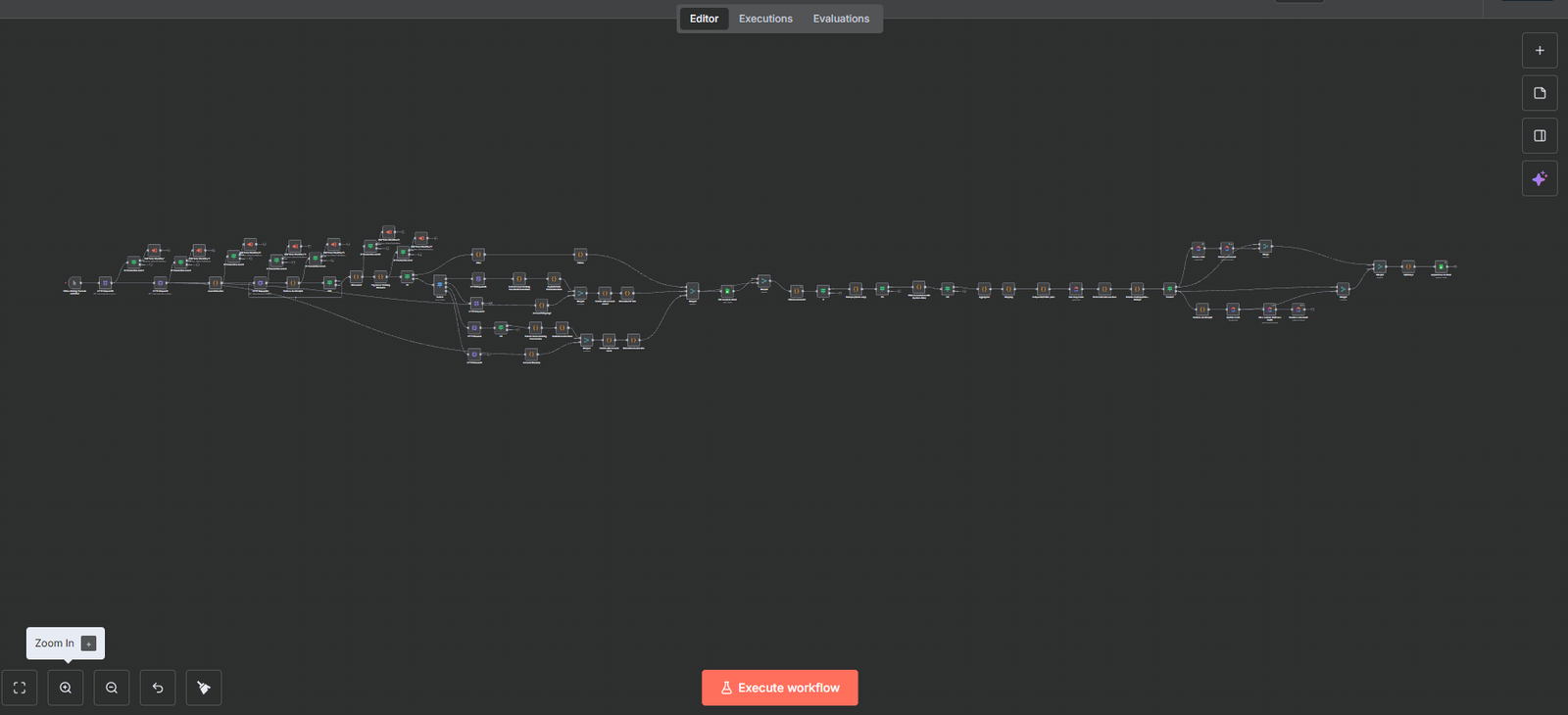 Bill approvals route based on thresholds, credit card usage gets tracked centrally, and the finance workflow runs end-to-end.
Bill approvals route based on thresholds, credit card usage gets tracked centrally, and the finance workflow runs end-to-end.- Workforce and Compliance Automation
Planday data syncs daily into ClickUp for centralized staffing visibility. Training assignments, KPI tracking, and supervision reminders run automatically. When thresholds get exceeded, approval workflows trigger.
- Recruitment and HR Automation
DocuSign sends offer letters automatically and signed documents flow back into candidate records. Vacancy requests submitted via form trigger the recruitment workflow with proper tracking.
- Maintenance and Asset Automation
Non-routine maintenance requests trigger approval workflows based on cost. Certificate expiry reminders go out 30 days in advance. The contractor database auto-populates contact details into tasks. Car checkout and location tracking runs digitally. Routine maintenance cycles regenerate after completion.
- Meeting and Execution Automation
Fireflies feeds meeting transcripts and action items directly into ClickUp as trackable tasks with owner assignment.
Workflow Orchestration
Status updates trigger the next stages automatically. An approved referral creates a young person record and assigns health registration tasks. Threshold-based approvals work for budget, staffing, and maintenance with automatic escalation.
This automation layer transformed Heart and Home’s operations from manual, reactive processes into a proactive system where information flows automatically.
Solution 2: Centralized Single Source of Truth in ClickUp
Camel Tech partnered with Heart and Home Living to rebuild operations inside ClickUp with a single, standardized operating system built to scale across multiple homes. We designed a workspace structure that separates house-level execution from HQ oversight, and added a central library for SOPs and templates. The result is shared visibility across homes, departments, and leadership without relying on spreadsheets, inboxes, or informal follow-ups.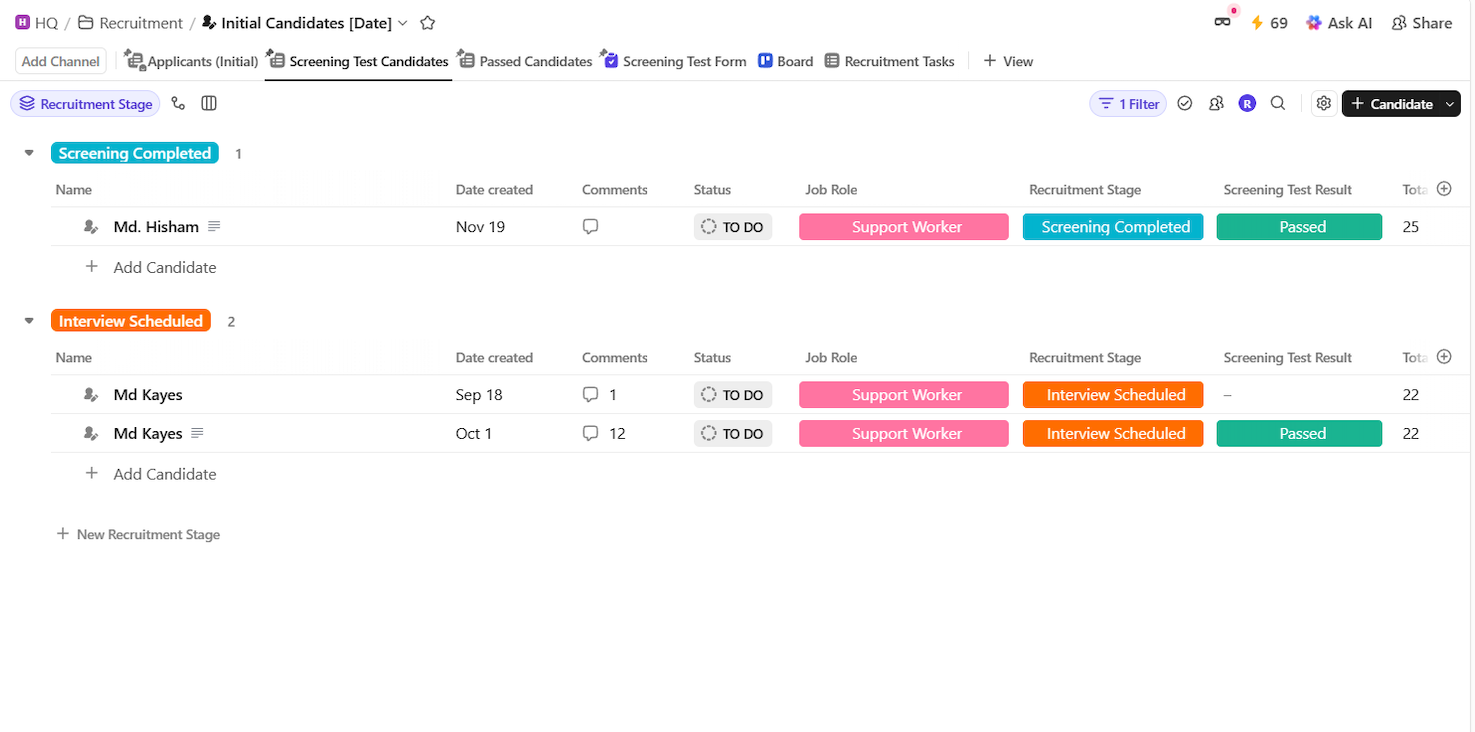
Solution 3: Standardized House Operating System Replicated Across All Houses
To ensure consistency across every location, we built a standardized House Operating System replicated across all homes. Each house runs the same structure and includes the operational lists Heart and Home needs: referrals, transition, health registration, young people records, maintenance, certificates, vehicles and car checkout, IT tracking, reports and audits, credit cards, recruitment and finance visibility, staff information, KPI tracking, supervision, reviews, and training. Each home also includes a dedicated House Dashboard so managers and leadership can see priorities, risks, and progress without chasing updates.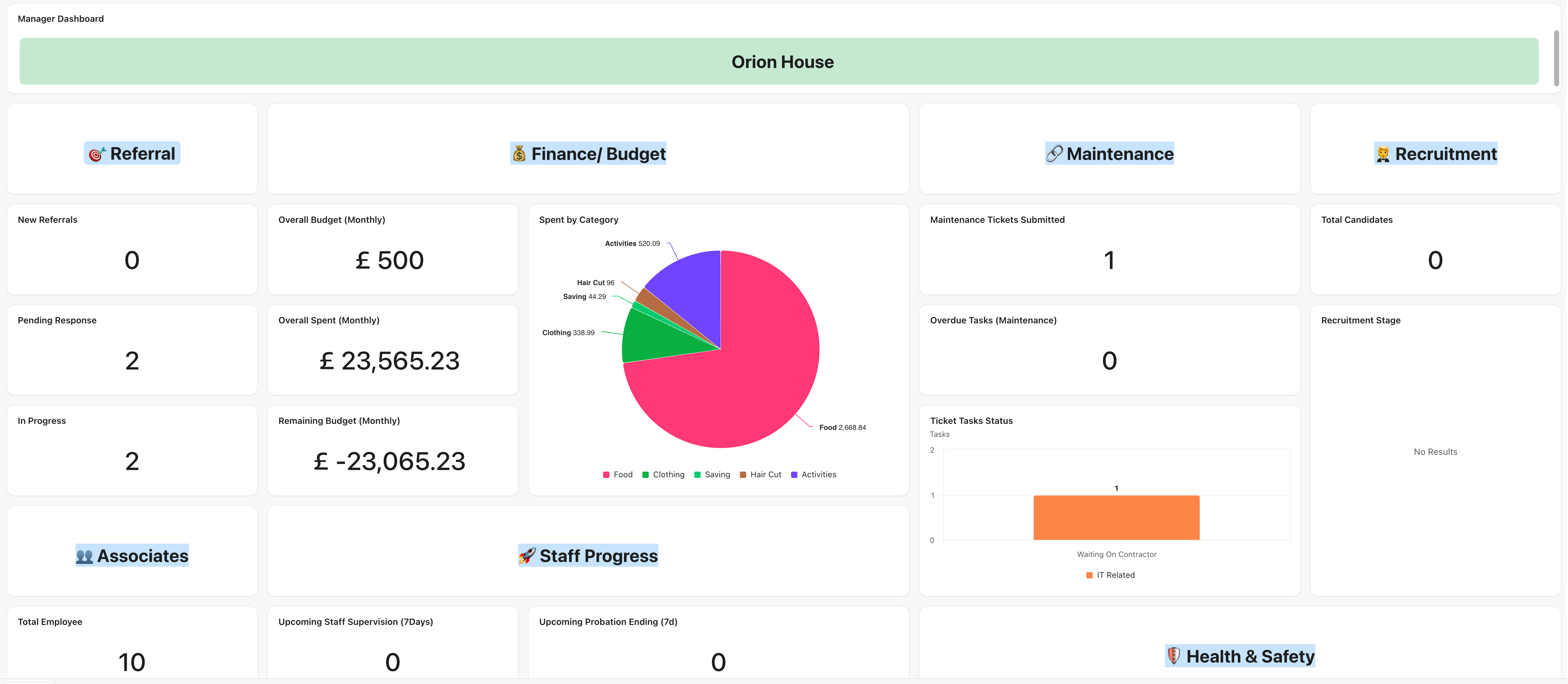 This cut down confusion, kept everything consistent, and made opening new homes way more predictable.
This cut down confusion, kept everything consistent, and made opening new homes way more predictable.Solution 4: Automated Referral Pipeline
We rebuilt the referral process into a trackable lifecycle. Referrals are ingested from email into ClickUp via n8n, then routed automatically to the correct house. Managers review suitability and progress referrals through clear stages including Transition and Moving with deadlines and reminders, plus Health Registration tracking for compliance. 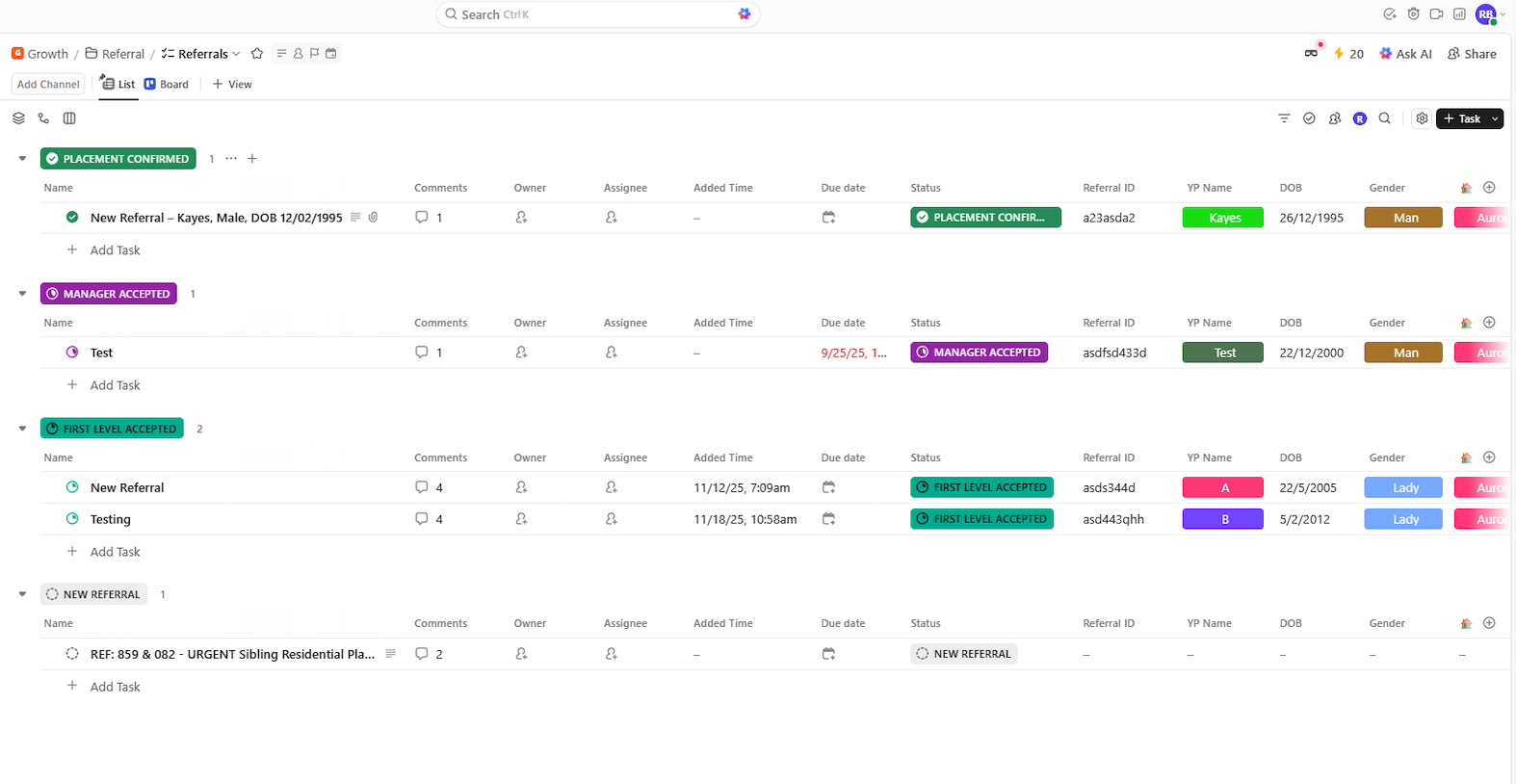 Once approved, the system automates the placement handoff and creates the young person record in the right place. The referral pipeline is now visible with clear deadlines and accountability, no more inbox chasing.
Once approved, the system automates the placement handoff and creates the young person record in the right place. The referral pipeline is now visible with clear deadlines and accountability, no more inbox chasing.Solution 5: Recruitment Engine
Recruitment became a connected pipeline from vacancy request to onboarding. House Managers submit vacancy requests via form, and CVs received by email are ingested into ClickUp via n8n, creating a structured candidate flow. Screening and interview workflows capture decisions and context in each candidate record, supported by Fireflies summaries. When an offer is sent, DocuSign triggers automatically and signed documents attach back, while DBS updates are captured through automated email ingestion.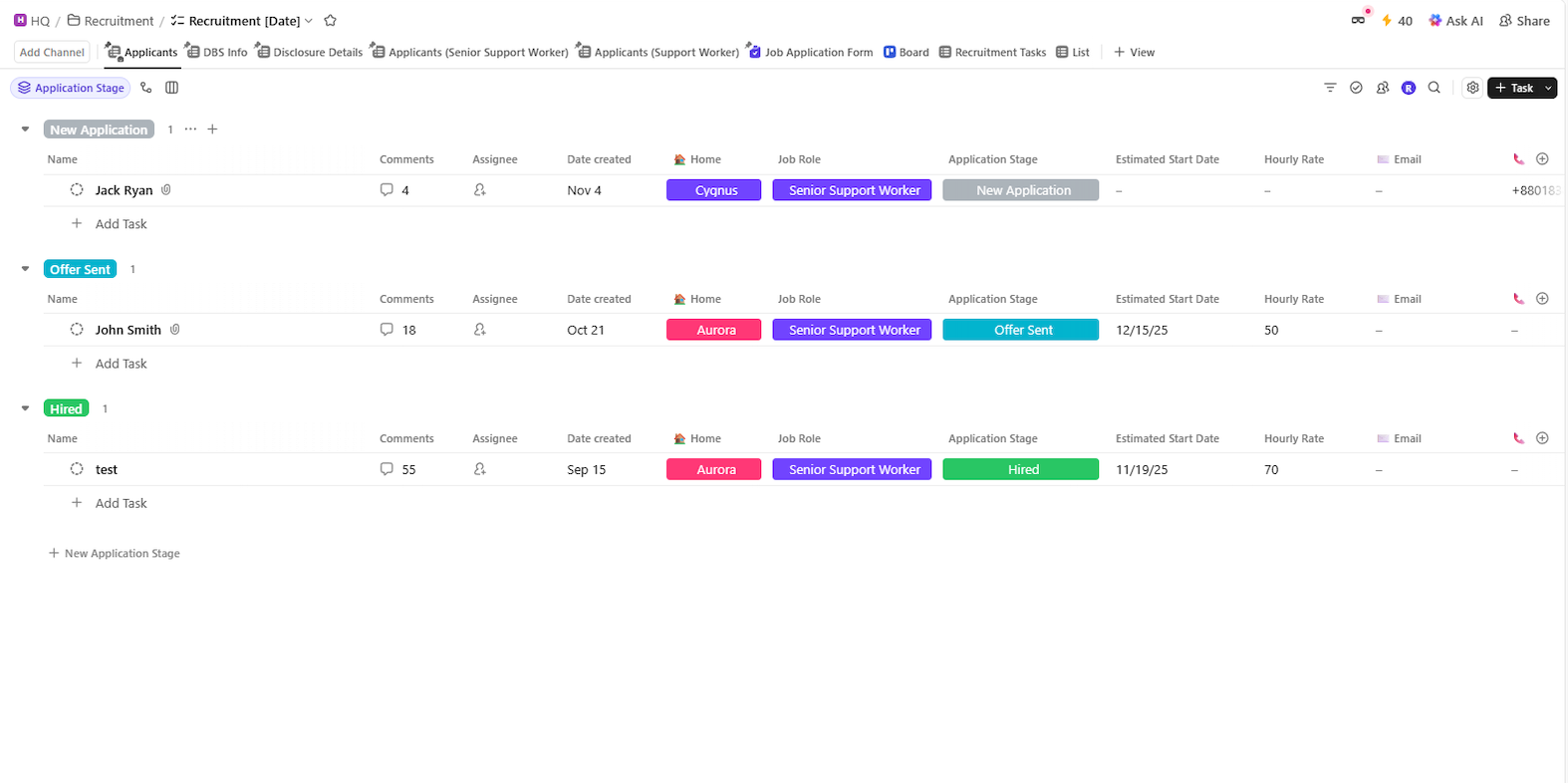 Once hired, candidates flow into probation and review tracking, employee directories, and automated supervision reminders and training assignments. Hiring became structured, everyone could see what was happening, and the manual work dropped way down.
Once hired, candidates flow into probation and review tracking, employee directories, and automated supervision reminders and training assignments. Hiring became structured, everyone could see what was happening, and the manual work dropped way down.Solution 6: Maintenance and Compliance System
We implemented a proactive maintenance and compliance system. Routine maintenance runs on recurring cycles with pre-due reminders and automatic regeneration after completion. Non-routine requests can be submitted via form and tracked centrally with updates syncing back to each house view. Certificates are stored with expiry dates and trigger 30-day reminders. Contractors are managed through a database that pulls contact details into tasks. Vehicles and car checkout are tracked digitally, and IT issues are logged in a dedicated list. 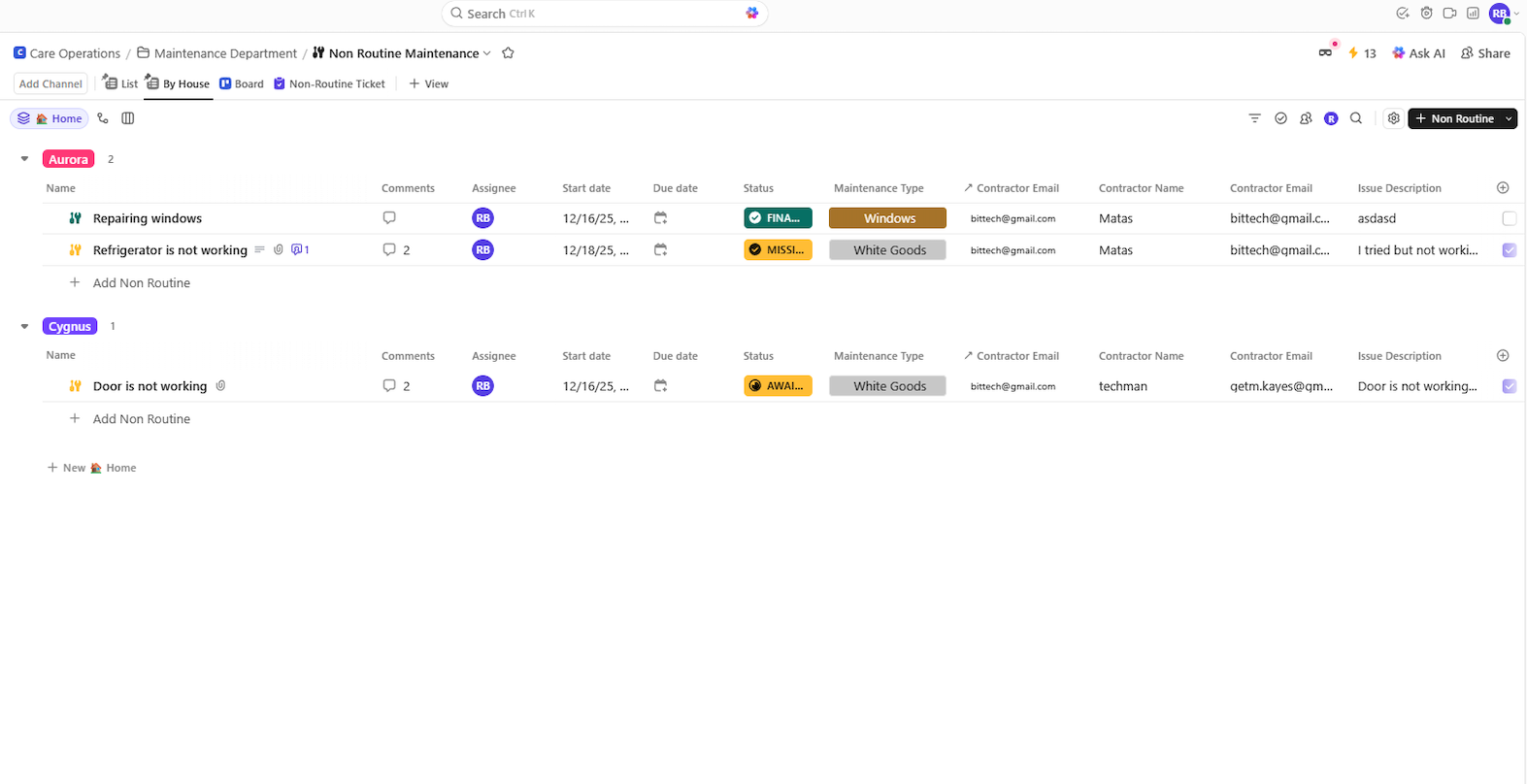 Maintenance and compliance became structured, trackable, and proactive.
Maintenance and compliance became structured, trackable, and proactive.Solution 7: Automated Finance Operations
We built finance visibility into ClickUp for easier budget and transaction tracking. A centralized finance list supports house-level budget views, while Xero sync via n8n brings expenses and income into the system. Formula fields provide remaining budget visibility and status indicators, and income tracking supports paid-versus-due reporting. Finance tracking moved out of manual spreadsheets and became much simpler to manage.
Solution 8: Workforce Visibility and Approvals
To strengthen staffing governance, we integrated workforce visibility and approval routing directly into ClickUp. Planday data flows in via n8n, showing daily and weekly staffing totals by house and centrally. When hours exceed thresholds, approvals route automatically. Leadership gets better visibility without the back-and-forth.
Solution 9: Reports and Audits Automation
We implemented structured intake, storage, and review routing for audits so compliance documentation is easy to find and consistently managed. Reg44 and other reports are ingested into ClickUp via n8n, stored as PDFs in house-level Reports and Audits lists, and tracked through clear submission and review statuses. Monthly audit submissions are routed to the Regional Manager for review and approval, ensuring visibility and accountability without Drive-folder searching.
Solution 10: EOS Implementation and Meeting Automation
To create a consistent leadership execution rhythm, we implemented EOS inside ClickUp across two layers: Regional Manager EOS and Higher Officials EOS. EOS components include Rocks, Scorecards, L10 meetings, Issues, To-Dos, and People Analyzer. Fireflies outputs are sent into ClickUp via n8n, turning meeting outcomes into tracked action items so execution stays consistent.
Solution 11: SOPs, Videos, and Templates Library
To support training, onboarding, and consistent execution, we centralized enablement materials in a dedicated SOP and Templates Space. Documentation is stored in one searchable location, SOP videos cover key workflows, and templates support recurring processes like audits, car checkouts, supervision, and maintenance requests. Teams now have clear guidance for consistent execution across houses.
Full Implementation Summary
- Automation Architecture via n8n: Email-to-ClickUp ingestion for referrals, CVs, DBS updates, and reports; financial sync with Xero; workforce sync with Planday; DocuSign for recruitment; Fireflies for meeting action items.
- Centralized Single Source of Truth: A standardized ClickUp workspace separating house-level execution from HQ oversight with a central SOP and templates library.
- Standardized House Operating System: One replicable structure covering referrals, maintenance, certificates, vehicles, IT, reports, recruitment, finance, staff information, KPIs, supervision, and training, with a dedicated House Dashboard per location.
- Automated Referral Pipeline: Trackable lifecycle from intake through suitability review, placement, transition, and health registration, with automatic routing and deadline tracking.
- Recruitment Engine: Connected pipeline from vacancy request to onboarding, including DocuSign offer letters, DBS tracking, Fireflies interview summaries, and automated supervision and training assignment.
- Maintenance and Compliance System: Proactive tracking with recurring cycles, 30-day certificate expiry reminders, contractor database, digital car checkout, and non-routine request approval workflows.
- Automated Finance Operations: Xero sync, house-level budget visibility, formula fields for remaining spend, and paid-versus-due income reporting.
- Workforce Visibility and Approvals: Planday data synced daily into ClickUp with threshold-based approval routing for staffing overages.
- Reports and Audits Automation: Reg44 and other reports ingested via n8n, stored as PDFs, and routed to Regional Manager for review and approval.
- EOS Implementation and Meeting Automation: Rocks, Scorecards, L10s, Issues, To-Dos, and People Analyzer across Regional Manager and Higher Officials layers, with Fireflies-to-ClickUp action item creation.
- SOPs, Videos, and Templates Library: Centralized enablement space with searchable documentation, video walkthroughs, and checklists for recurring processes.
Tools Used
- ClickUp: Central operating system for houses and HQ covering referrals, recruitment, compliance, maintenance, finance, workforce visibility, EOS, dashboards, and SOPs/templates.
- n8n: Automation layer for email ingestion and workflow routing (referrals, CV intake, report uploads), plus integrations between tools (Xero, Planday, Fireflies, DocuSign) and ClickUp.
- Email: Primary intake channel for referrals, CVs, DBS updates, and reports, then automated into ClickUp.
- Xero: Finance data source synced into ClickUp for expenses, income tracking, and budget visibility.
- Planday: Workforce scheduling data synced into ClickUp for daily/weekly hours visibility and approval workflows.
- DocuSign: Offer letter and document signing, triggered via automation and attached back to candidate records in ClickUp.
- Fireflies.ai: Meeting recording and transcripts that feed into ClickUp to generate action items for EOS execution.
Results in Detail
100% Operational Visibility
Leadership now has a real-time view of every house, referral, and compliance metric from a single dashboard. The House Dashboard gives managers and leadership a clear picture of priorities, risks, and progress across every location without any back-and-forth.
Risk Elimination
Automated alerts for certificates and maintenance removed almost all compliance risk. With 30-day certificate expiry reminders, recurring maintenance cycles, and structured audit submission routing, the organization moved from reactive firefighting to proactive compliance management.
Admin Time Slashed
By automating the heavy lifting of recruitment and referrals, staff can focus on providing high-quality child care rather than data entry. Email-to-ClickUp automation eliminated manual task creation for referrals, CVs, DBS updates, and reports. DocuSign integration removed manual offer letter handling. Fireflies eliminated manual meeting notes and follow-up emails.
Scalability Unlocked
With a standardized House Operating System and pre-loaded SOP templates, Heart and Home Living can open new residential homes faster than before. Every new house gets the same structure from day one, so managers know how to operate it and leadership can monitor it from the same dashboard.
Financial Control
Real-time integration with finance and workforce tools means the organization never has to guess budget status. Xero sync brings expenses and income into ClickUp automatically, formula fields show remaining budget per house, and threshold-based staffing approvals prevent uncontrolled overtime spend.
A Foundation Built to Scale
Heart and Home Living now runs like a much larger operation. They can open new homes across the UK without worrying the systems will break.

What began as a Salesforce migration became a complete business transformation. See how Camel Tech
Learn how Camel Tech implemented ClickUp for a medical case management company, automating workflows, centralizing
Learn how a landscaping business automation system replaced email chaos, centralized operations, and helped a

Selected resource
Enter your email and we’ll send the resource directly to your inbox.
Check your inbox
We’ve received your request and will send the resource to your email.
Please check your spam or promotions folder if you don’t see it shortly.