Camel Tech

How Ring Digital Transformed Salesforce into a Unified Notion Business Operating System

Notion Business Operating System

Quick Answer

Ring Digital initially partnered with Camel Tech to migrate its Salesforce CRM into Notion. But the project quickly revealed a larger challenge: CRM, campaign delivery, billing, finance, project management, and executive reporting were operating through disconnected systems and manual workflows.
Instead of simply recreating Salesforce in Notion, Camel Tech built a unified Notion business operating system connecting the entire customer and revenue lifecycle, from lead acquisition and campaign delivery to billing, invoicing, commissions, payments, and executive reporting.

100%

Unified Business Operations

15

Automated Workflows

10+

Core Business Systems Consolidated

80%

Revenue Visibility

 Results at a Glance

  • 100% unified business operations by connecting CRM, Revenue Operations, Finance, Project Management, and Executive Reporting in one Notion workspace.
  • 40+ automated workflows supporting billing, invoices, commissions, task creation, QuickBooks synchronization, and other operational processes.
  • 10+ core business systems consolidated into one scalable business operating system.
  • End-to-end revenue visibility from lead acquisition through campaign delivery, billing, payment, and reporting.
  • Standardized operational workflows across Sales, Account Management, Operations, and Finance.
  • Live executive visibility into sales, revenue, billing, commissions, campaign performance, and operational KPIs.

 Company Overview

Company

Ring Digital

Location

Columbus, Ohio

Industry

Performance Marketing & Digital Advertising

Team Size

30+ employees

Client Base/Scale

Migrate from Salesforce and unify fragmented business operations.

Use Case

Salesforce Migration, Notion CRM, Revenue Operations, Finance Automation, Project Management, EOS, Executive Reporting

Ring Digital is a performance marketing agency specializing in customer acquisition, paid advertising, digital strategy, media buying, and marketing automation.
As the company expanded, managing customer relationships, campaign delivery, financial processes, and internal collaboration across multiple systems became increasingly difficult.
Salesforce managed customer information, but many operational processes existed outside it. Billing relied on manual workflows, finance operated separately, project execution followed different processes, and leadership lacked a unified view of business performance.
Ring Digital needed more than a Salesforce replacement. It needed a connected operational platform capable of supporting the entire business.

The 6 Problems That Were Limiting Ring Digital’s Operations

1. Salesforce No Longer Reflected How the Business Operated

Salesforce managed customer relationships, but it did not reflect Ring Digital’s complete operational workflow.
Teams still relied on additional tools and manual processes to connect sales, campaign delivery, finance, and project operations.

2. The Customer Lifecycle Was Fragmented

Customer information, campaigns, billing schedules, invoices, commissions, payments, and financial reporting existed across different systems.
This created duplicated information and made it difficult for departments to work from the same source of truth.

3. Revenue Operations Required Too Much Manual Work

Recurring billing schedules, invoice generation, payment tracking, and commission processing required significant manual administration.
As transaction volume increased, these repetitive processes became increasingly difficult to manage efficiently.

4. Departments Relied on Manual Handoffs

Sales, account management, operations, and finance were responsible for different stages of the customer lifecycle.
Information frequently had to be manually transferred between teams, creating delays and inconsistent processes.

5. Leadership Lacked Real-Time Business Visibility

Sales pipeline, projected revenue, billing status, commissions, campaign progress, and financial reporting were maintained separately.
Leadership often needed information to be consolidated before getting a complete picture of business performance.

6. Strategic Planning Was Disconnected From Execution

Ring Digital was using elements of the Entrepreneurial Operating System, but quarterly Rocks, L10 meetings, scorecards, issues, and accountability remained separate from daily operational work.
This made it harder to connect strategic objectives with execution.

How We Built a Unified Notion Business Operating System for Ring Digital

Instead of recreating Salesforce inside Notion, Camel Tech redesigned Ring Digital’s operational infrastructure around one principle:
Every department should work from the same connected data.
The implementation was organized into six core systems.

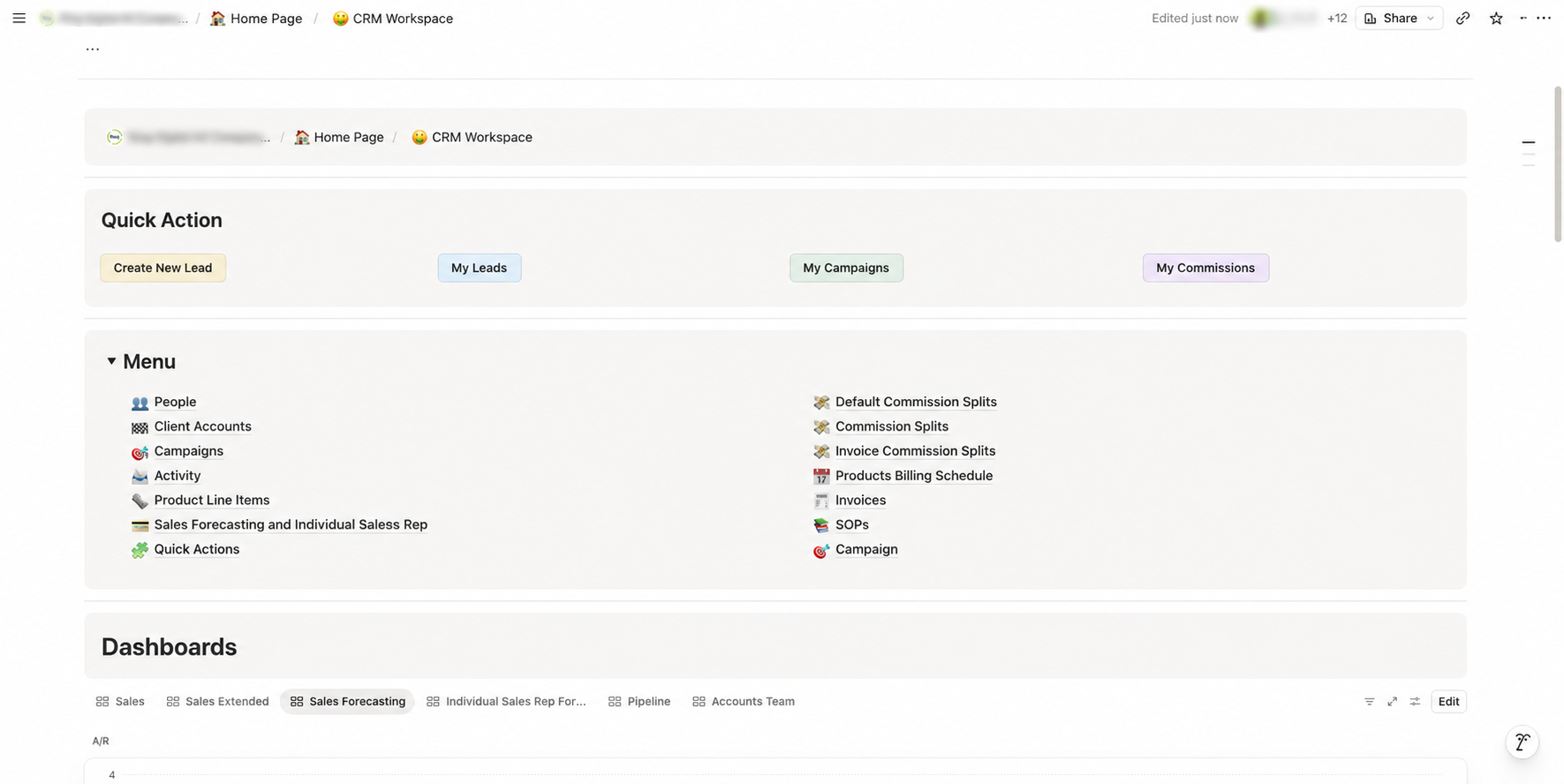
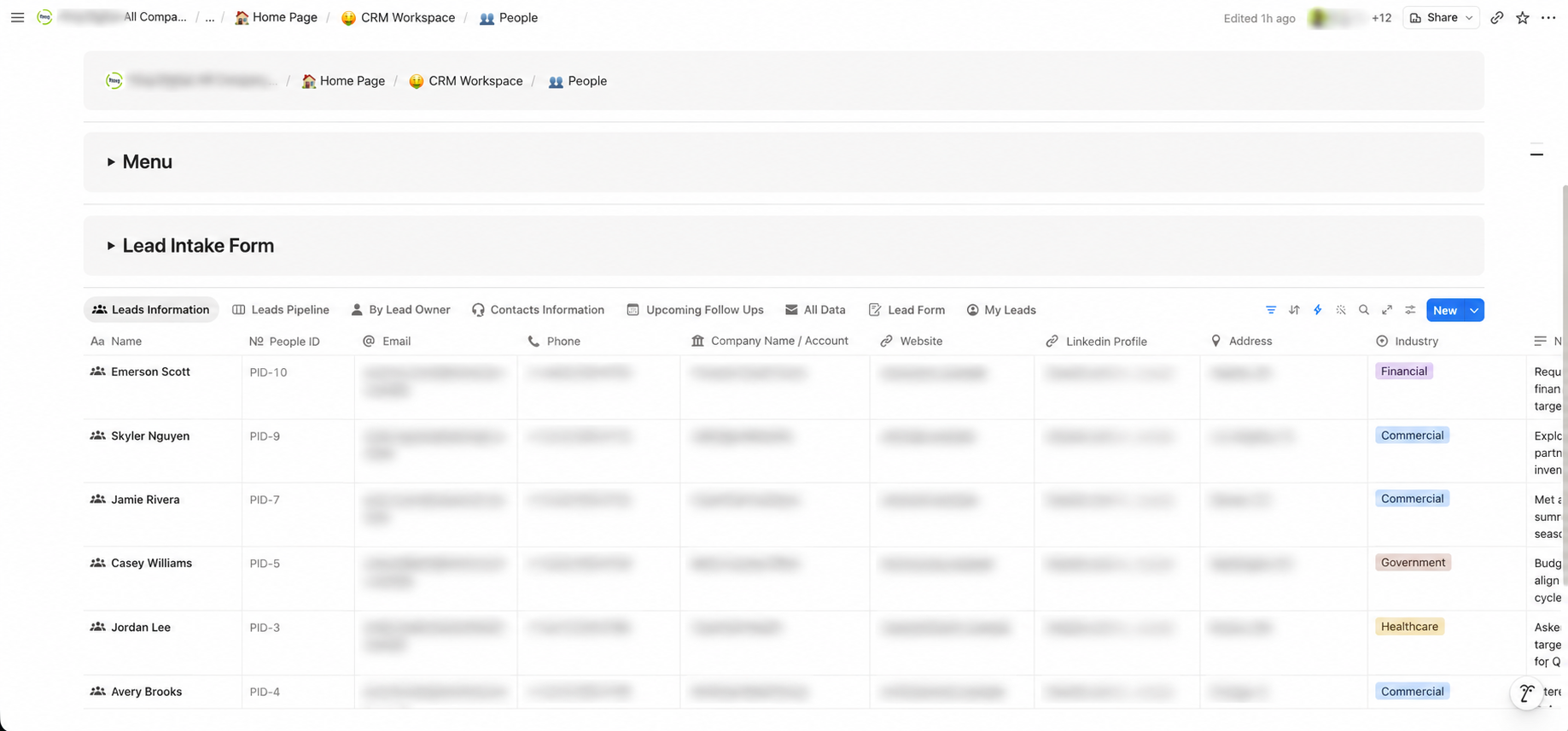
1. Salesforce Migration & Enterprise CRM

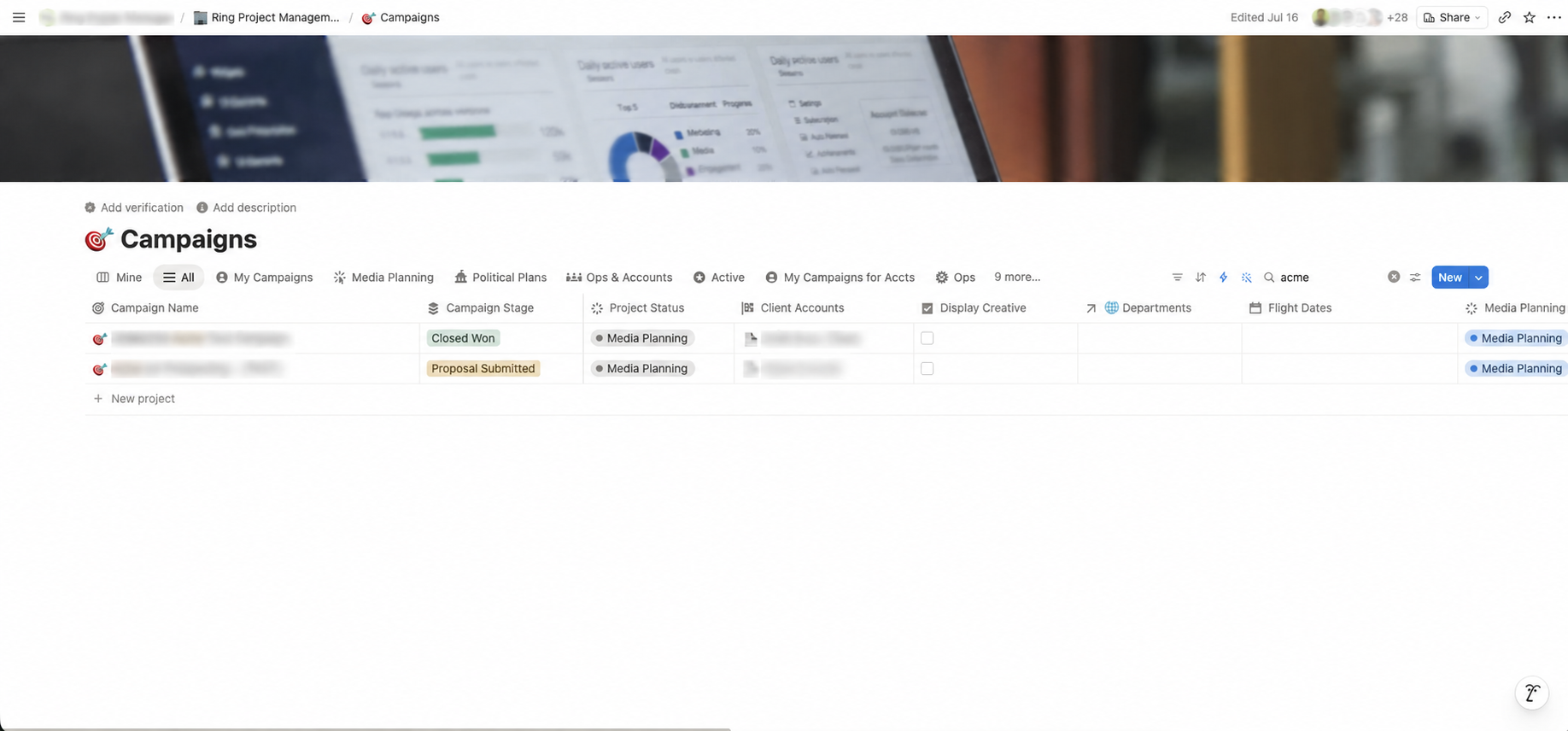
We migrated Ring Digital’s CRM from Salesforce into Notion while preserving customer relationships, historical information, and operational context.
Rather than replicating Salesforce’s original structure, the CRM was redesigned around Ring Digital’s actual customer lifecycle.
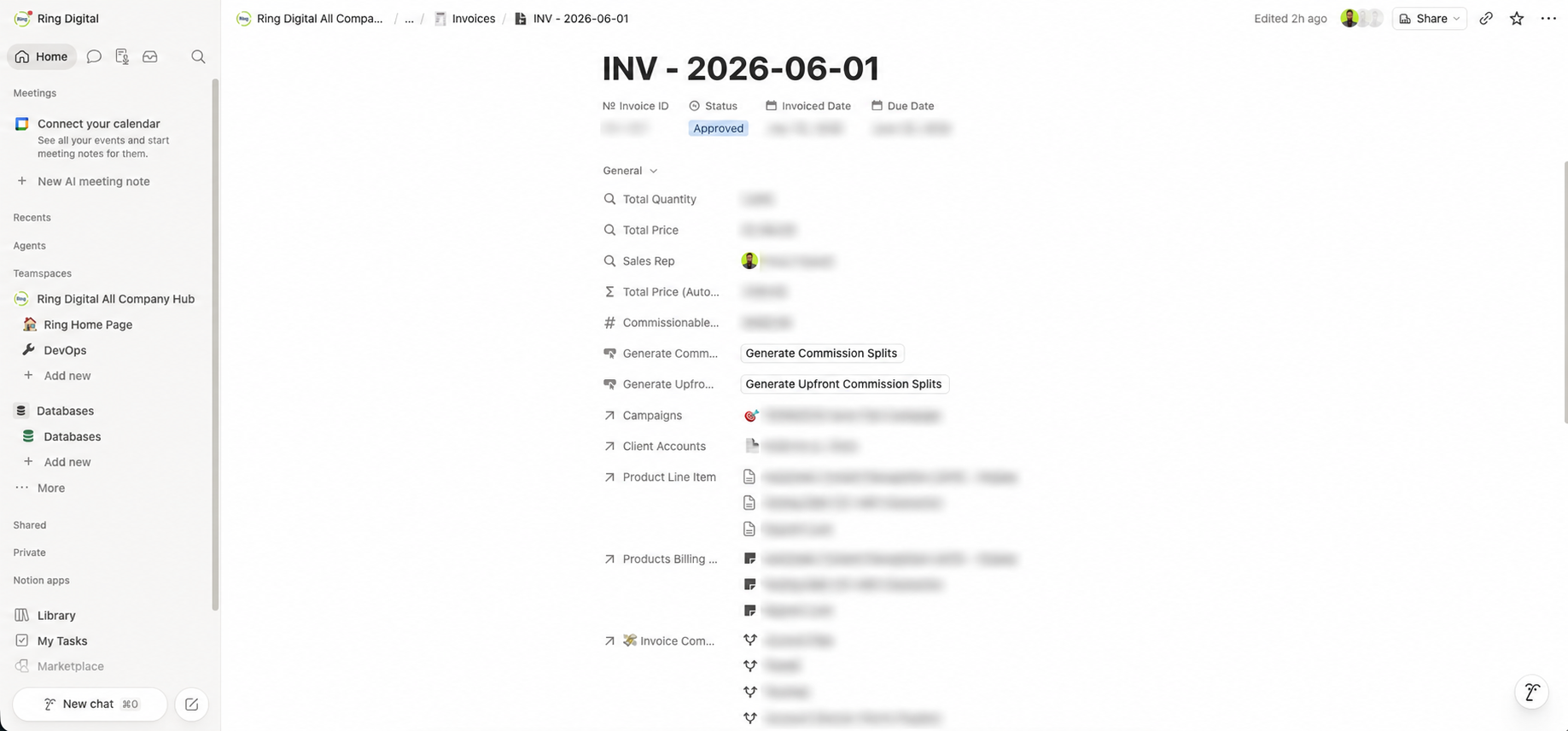
The new CRM includes:
  • Lead Management
  • Contacts
  • Accounts
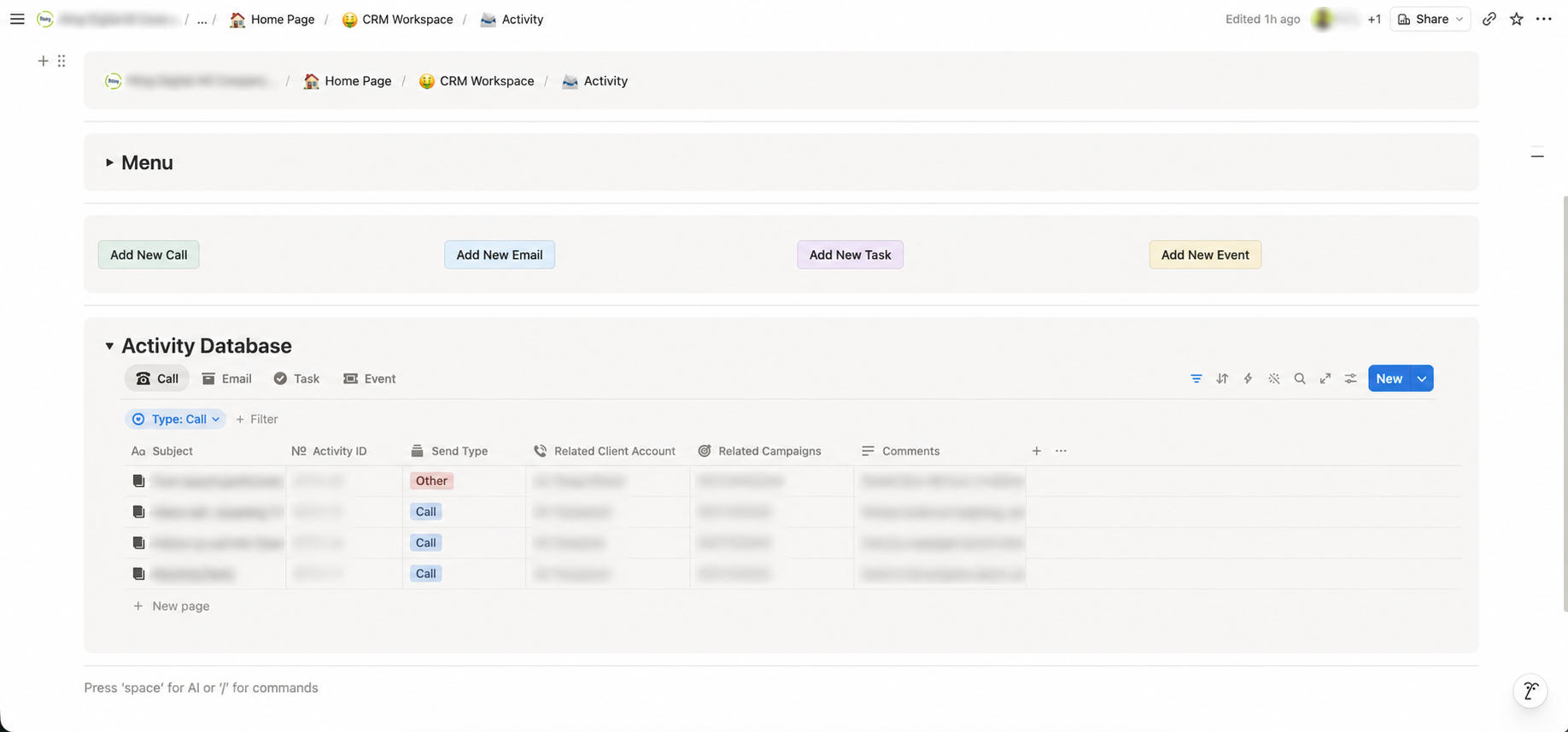
  • Activities
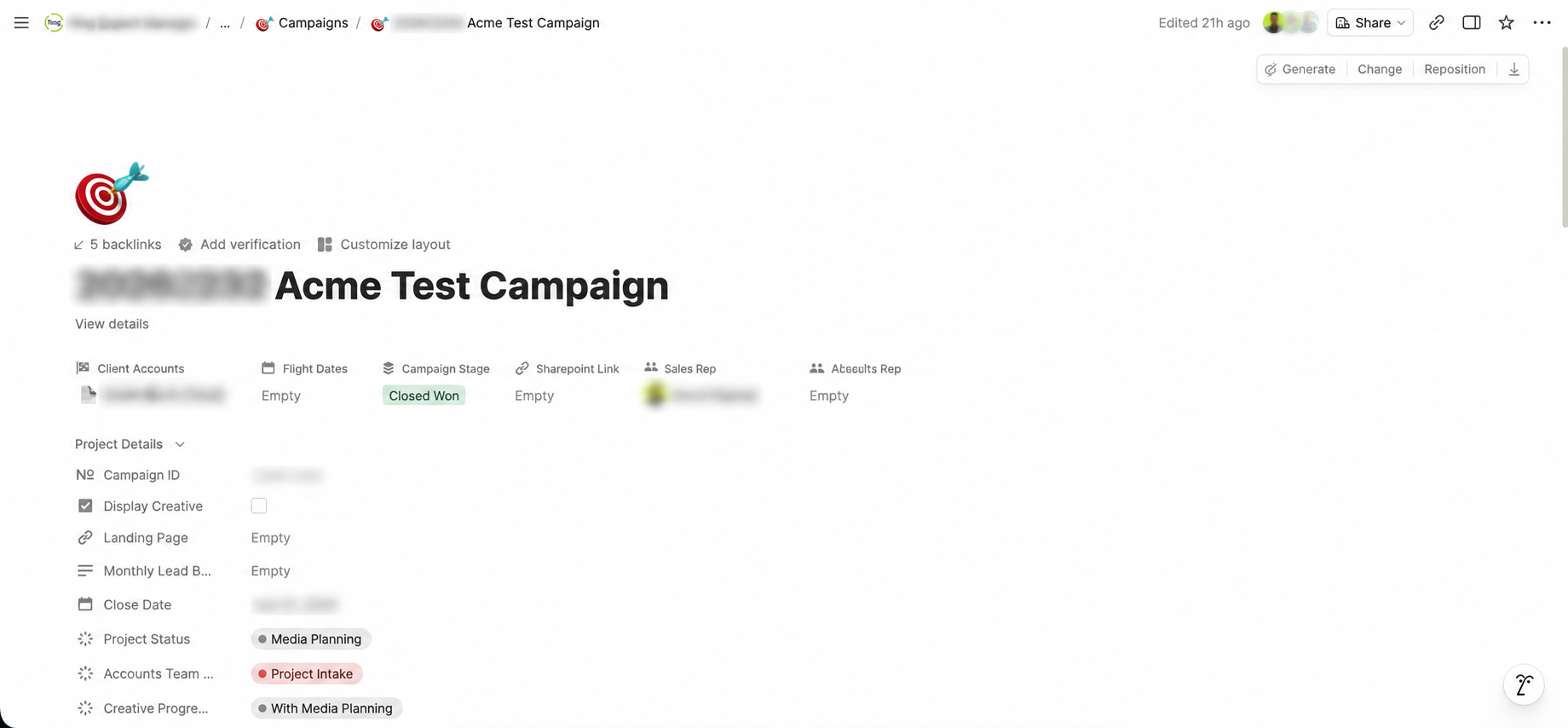
  • Campaigns
  • Opportunities
  • Relationship History
  • Client Communication Tracking
Customer information is now centralized, giving teams a complete view of each account throughout its lifecycle.
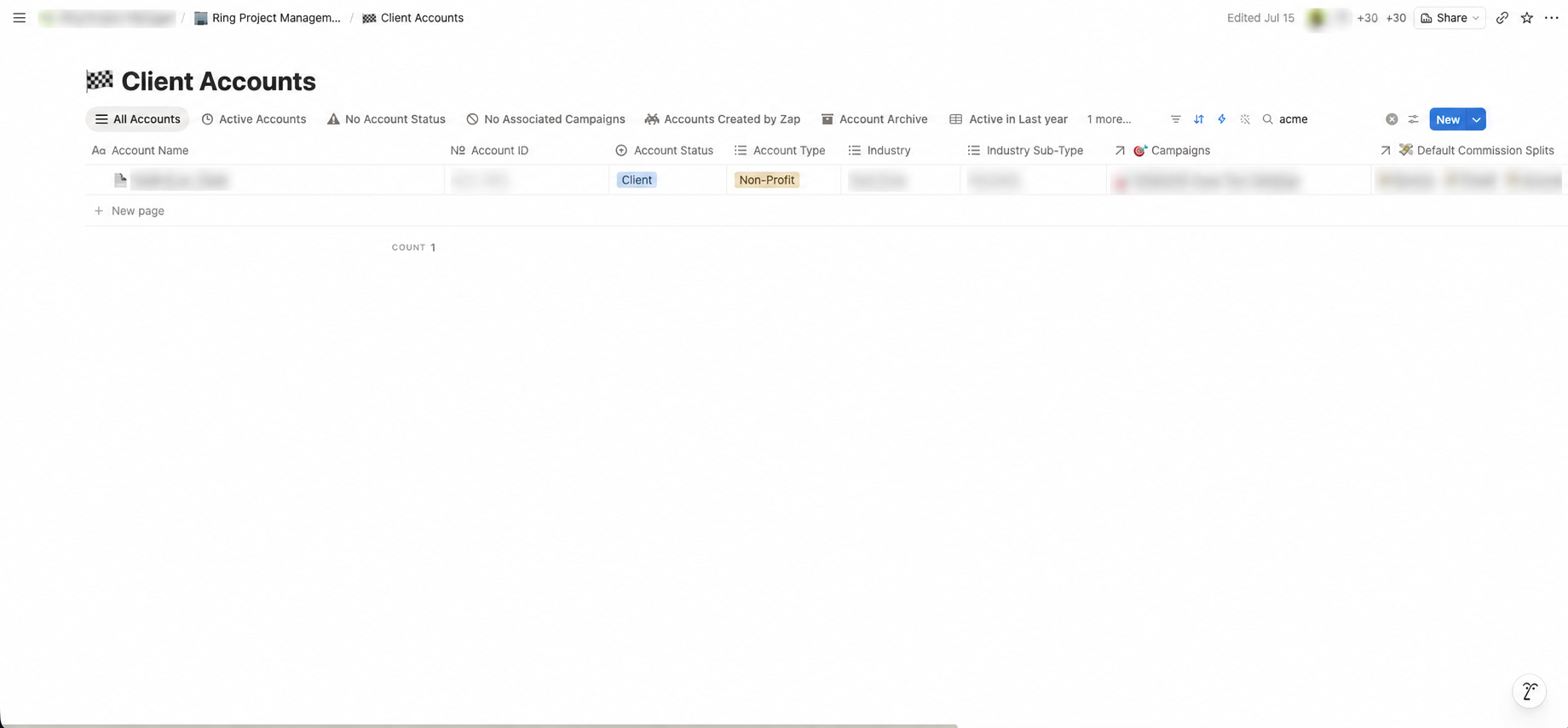
2. Revenue Operations & Campaign Management

We created a connected revenue operations architecture that standardizes how customers and revenue move through the business.
The core lifecycle follows:
Lead
↓
Account
↓
Campaign
↓
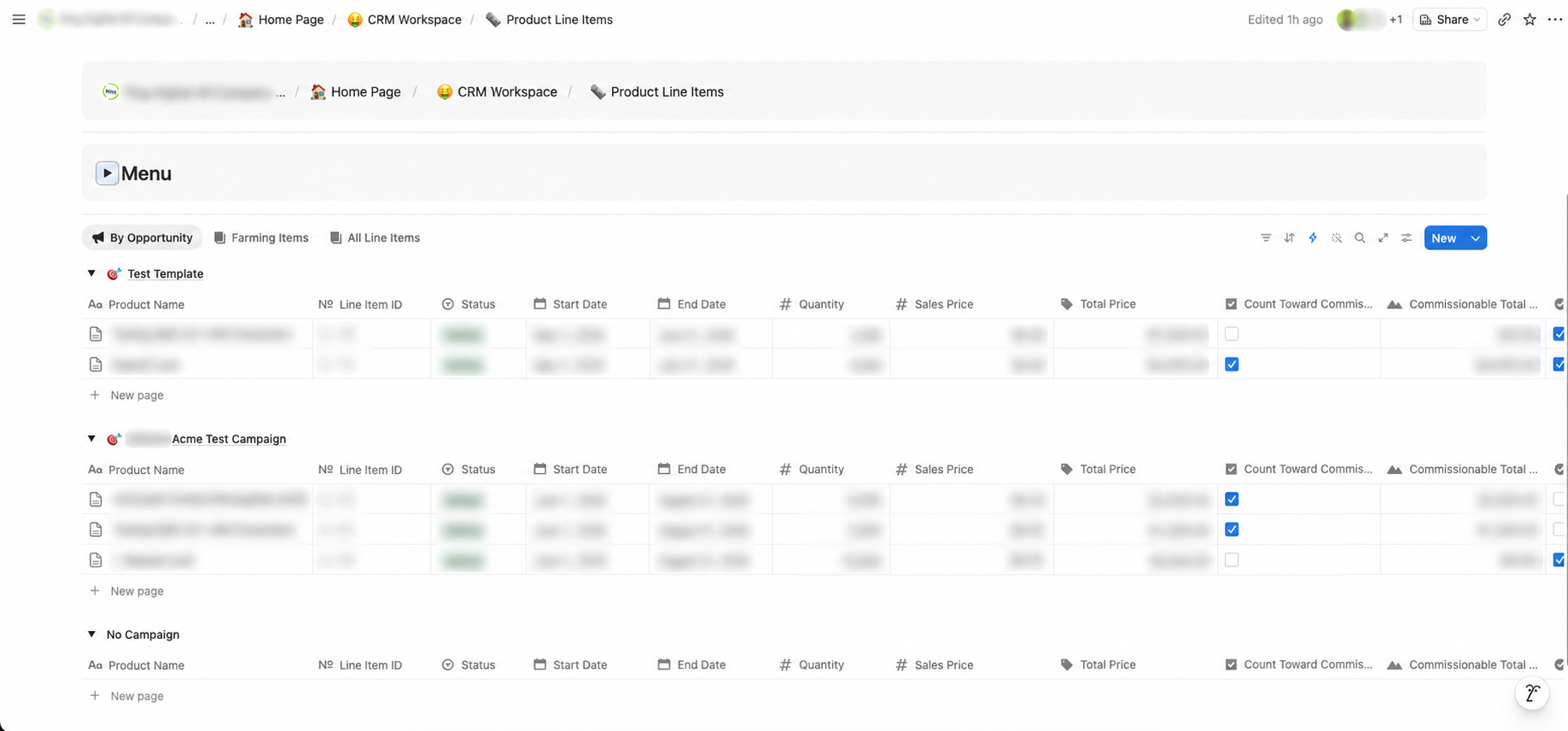
Product Line Items
↓
Billing Schedule
↓
Invoice
↓
Commission Split
↓
Payment Tracking
↓
Revenue Reporting


Campaign and project operations were connected directly to this architecture.
The system includes:
  • Campaign Management
  • Product and Service Tracking
  • Product Line Items
  • Billing Schedules
  • Task Management
  • Activity Logging
  • Operational Workflows
  • Cross-Team Collaboration
Instead of maintaining separate operational records, Sales, Account Management, Operations, and Finance now work from connected data throughout the customer lifecycle.
3. Financial Operations & Commission Management

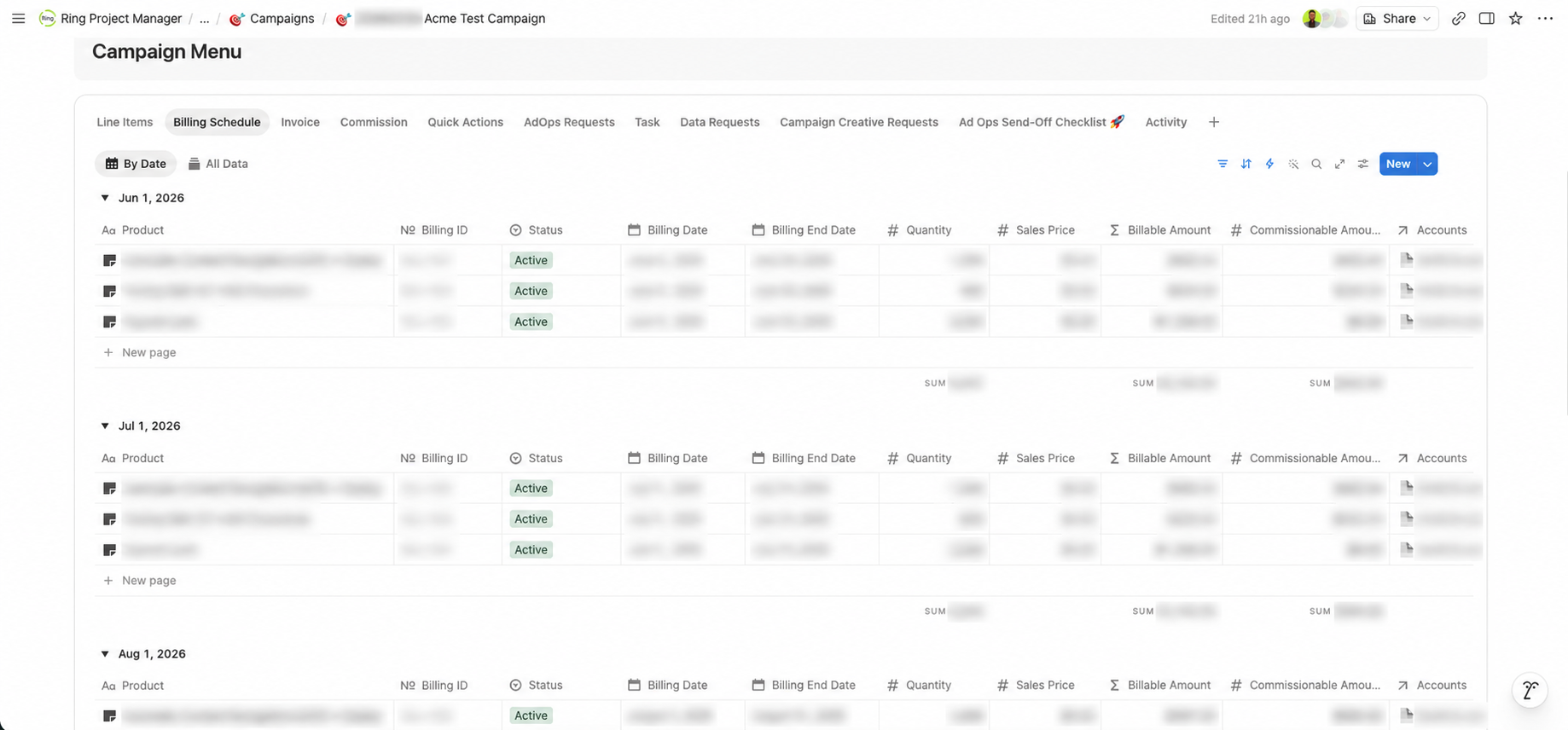
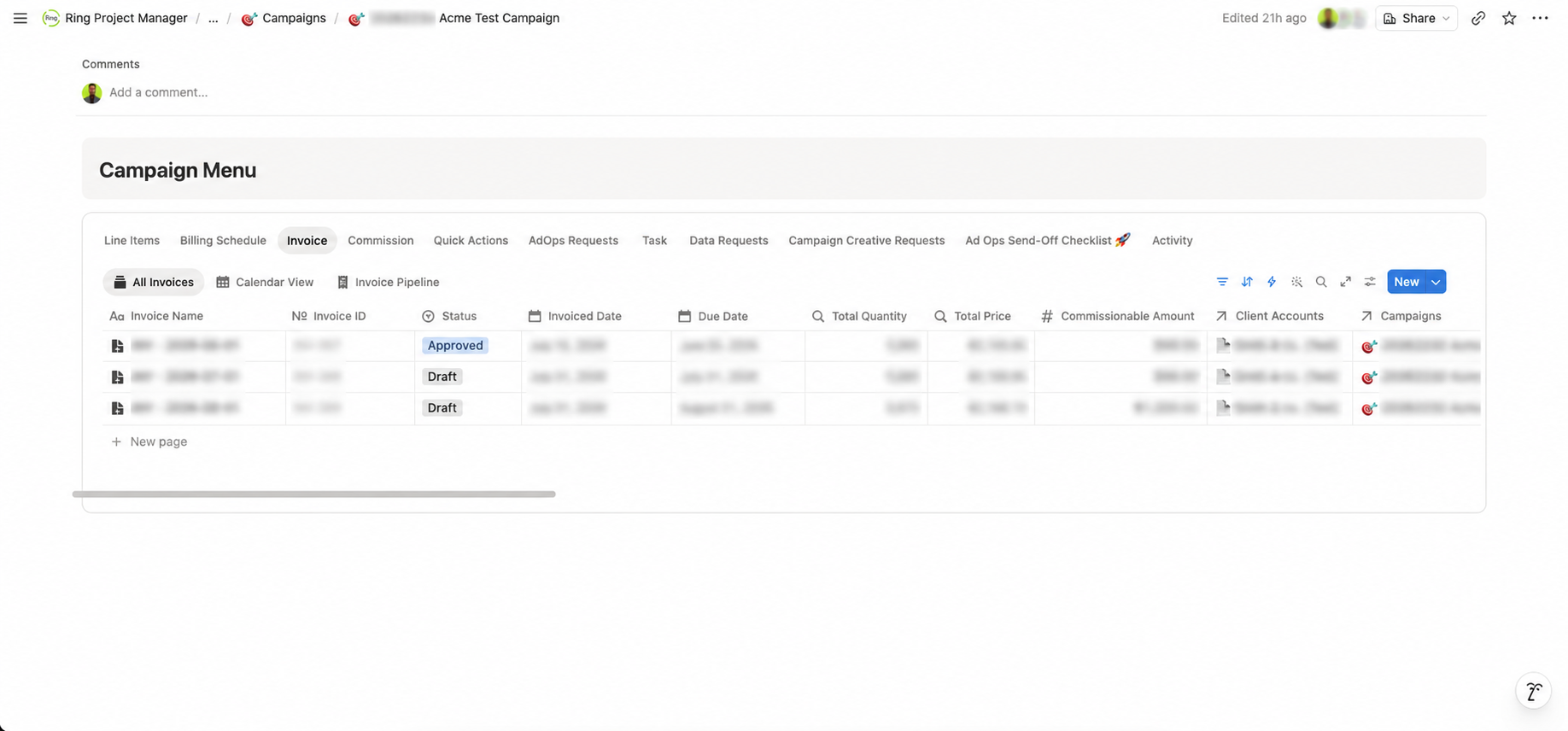
We built a connected financial operations system covering the processes that occur after campaigns and services are sold.
The system includes:
  • Recurring Billing Schedules
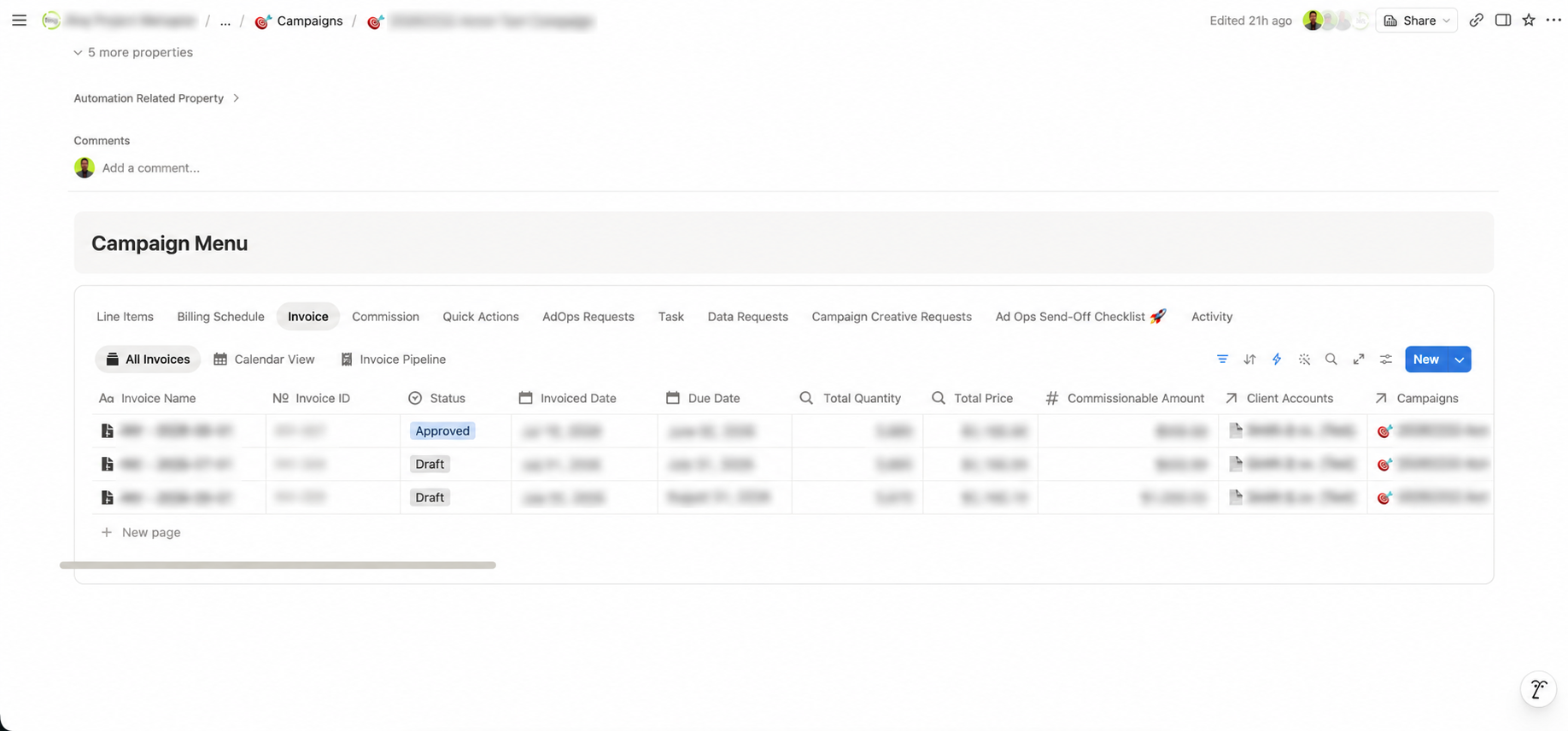
  • Invoice Management
  • Payment Tracking
  • Commission Management
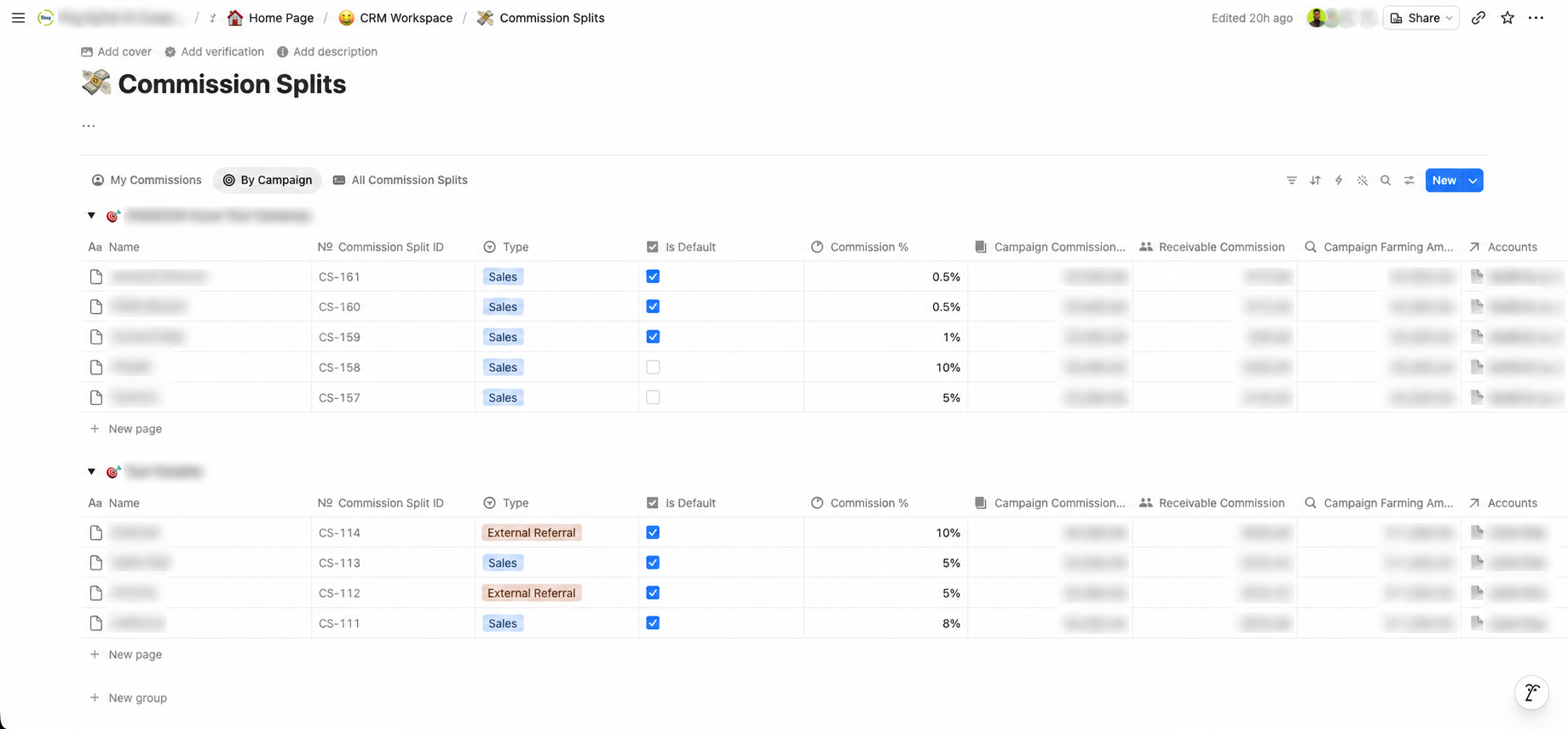
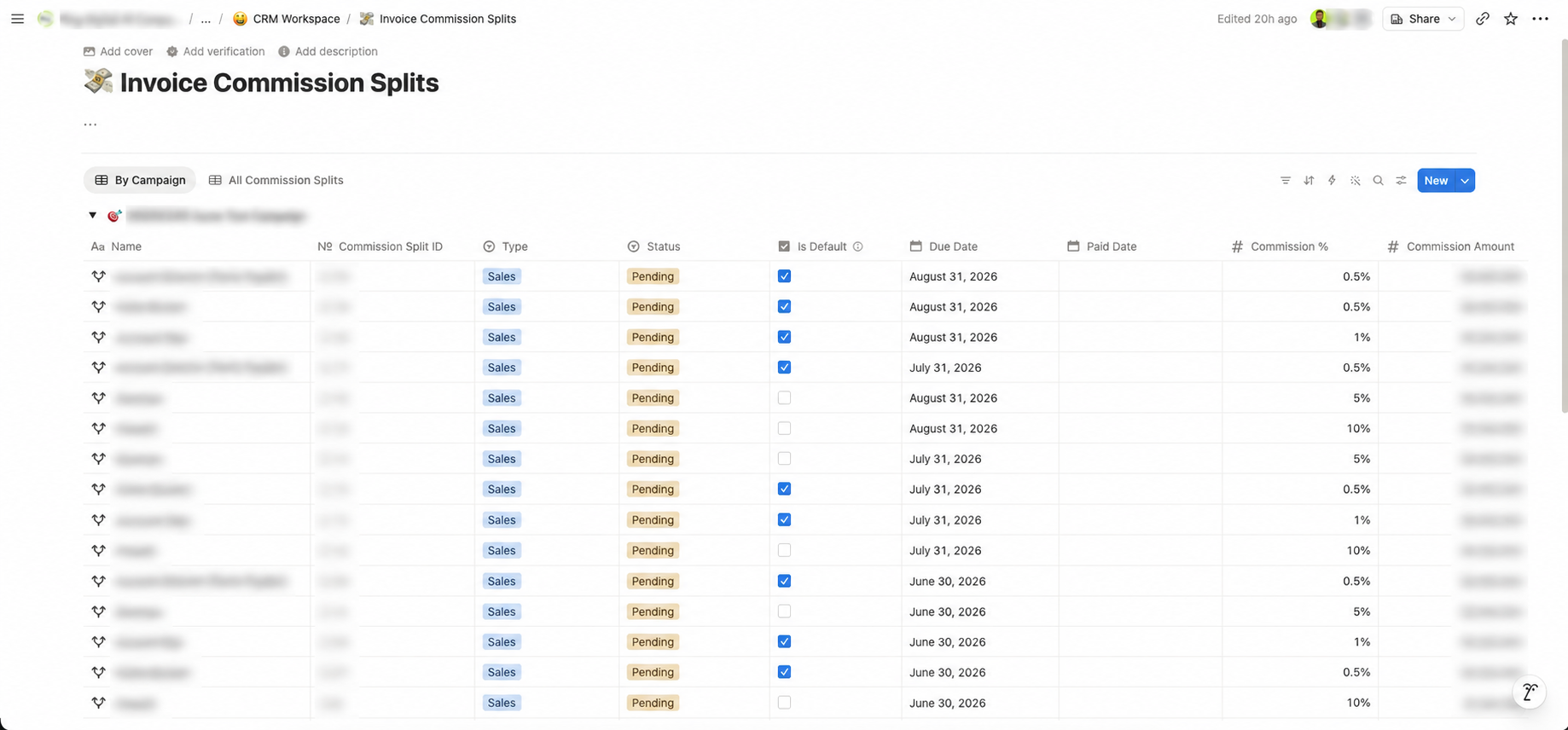
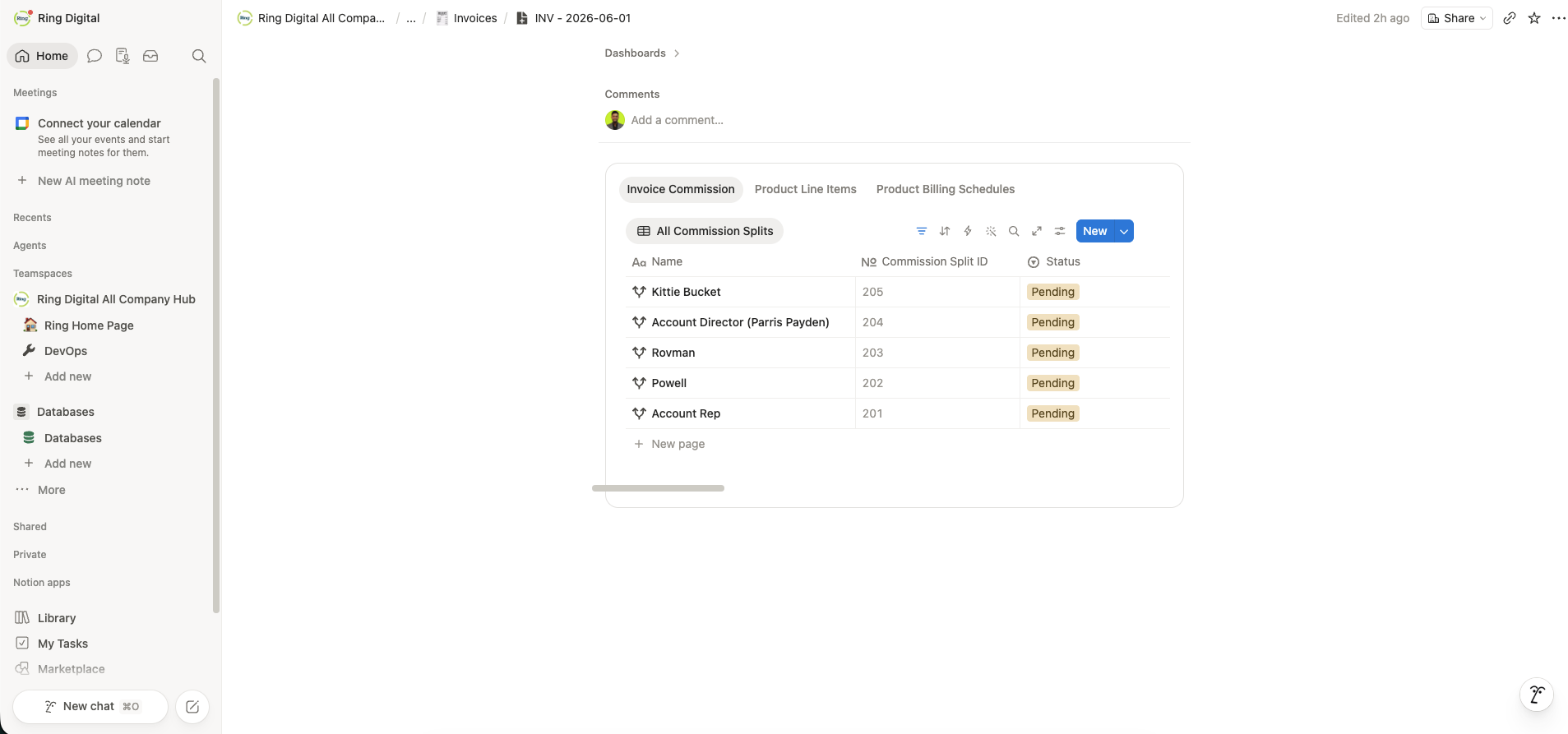
  • Commission Splits
  • Revenue Forecasting
  • Financial Status Monitoring
Billing schedules connect services to their appropriate billing periods, while invoices and commissions remain linked to the underlying customer and campaign data.
This creates greater traceability from the original sale through revenue collection and commission processing.
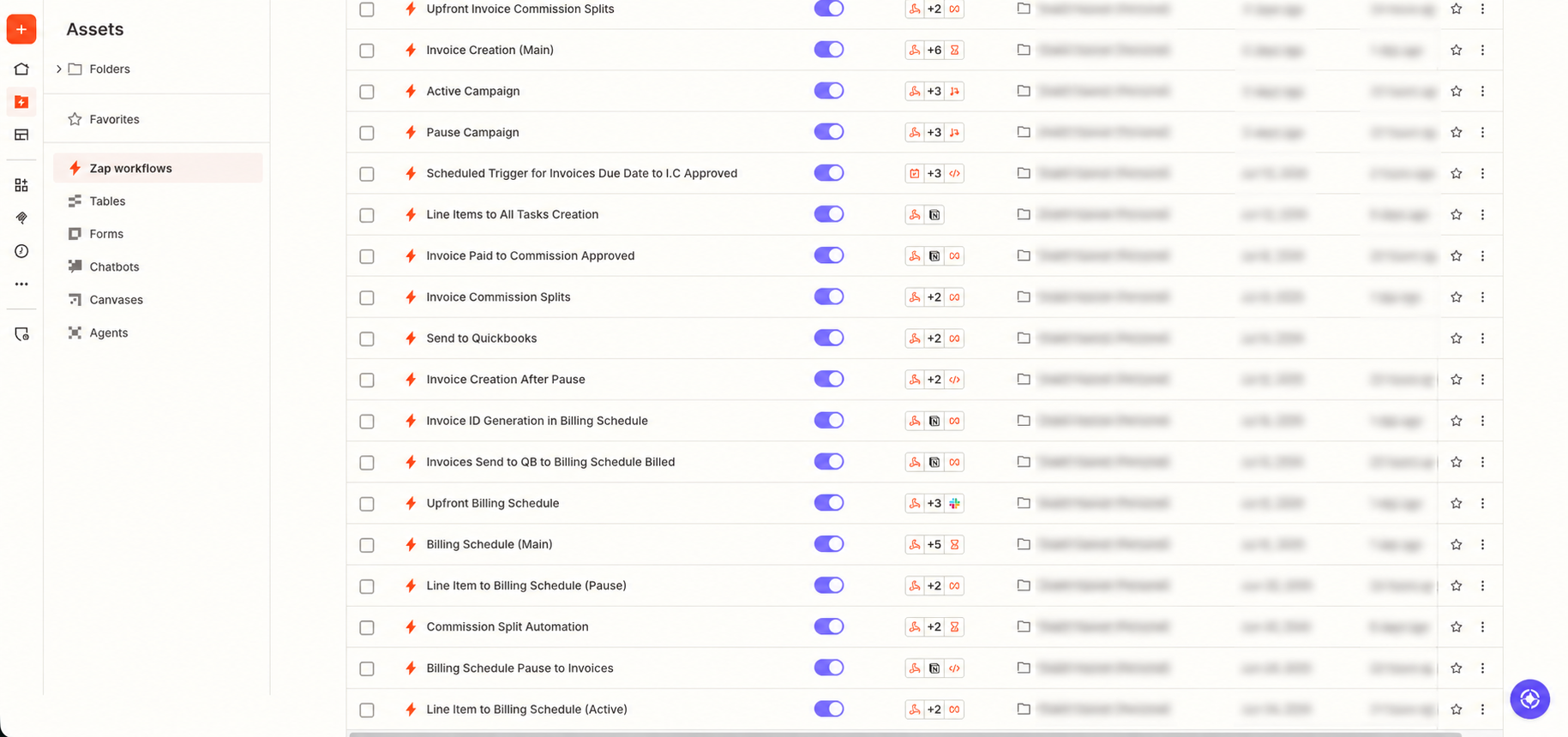
4. Workflow Automation

A major part of the implementation involved automating repetitive processes across Ring Digital’s operational lifecycle.
Using Zapier and custom workflow logic, we developed an automation ecosystem supporting processes such as
  • Billing Schedule Generation
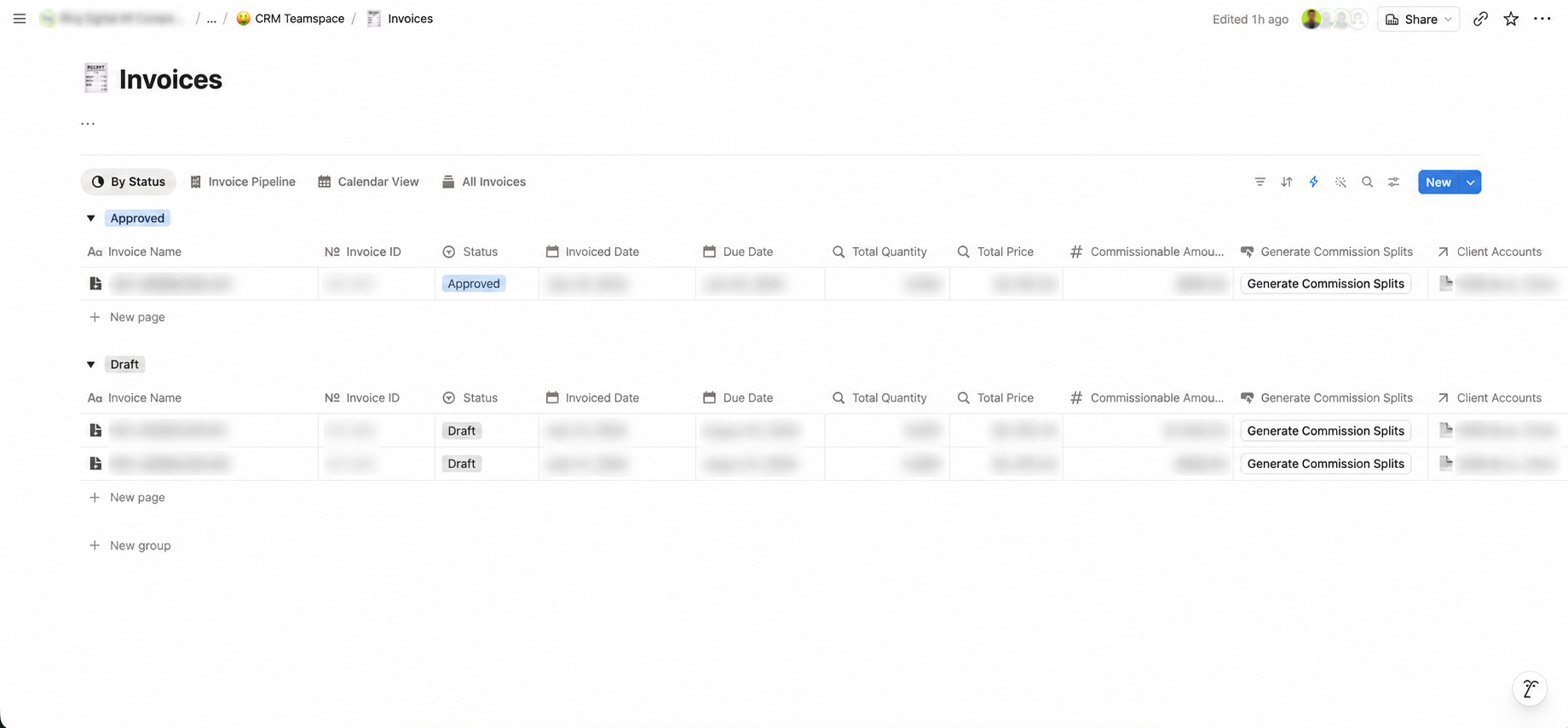
  • Invoice Creation
  • Invoice Status Synchronization
  • Commission Split Generation
  • Upfront Commission Processing
  • Commission Approval Workflows
  • Campaign Activation and Pause
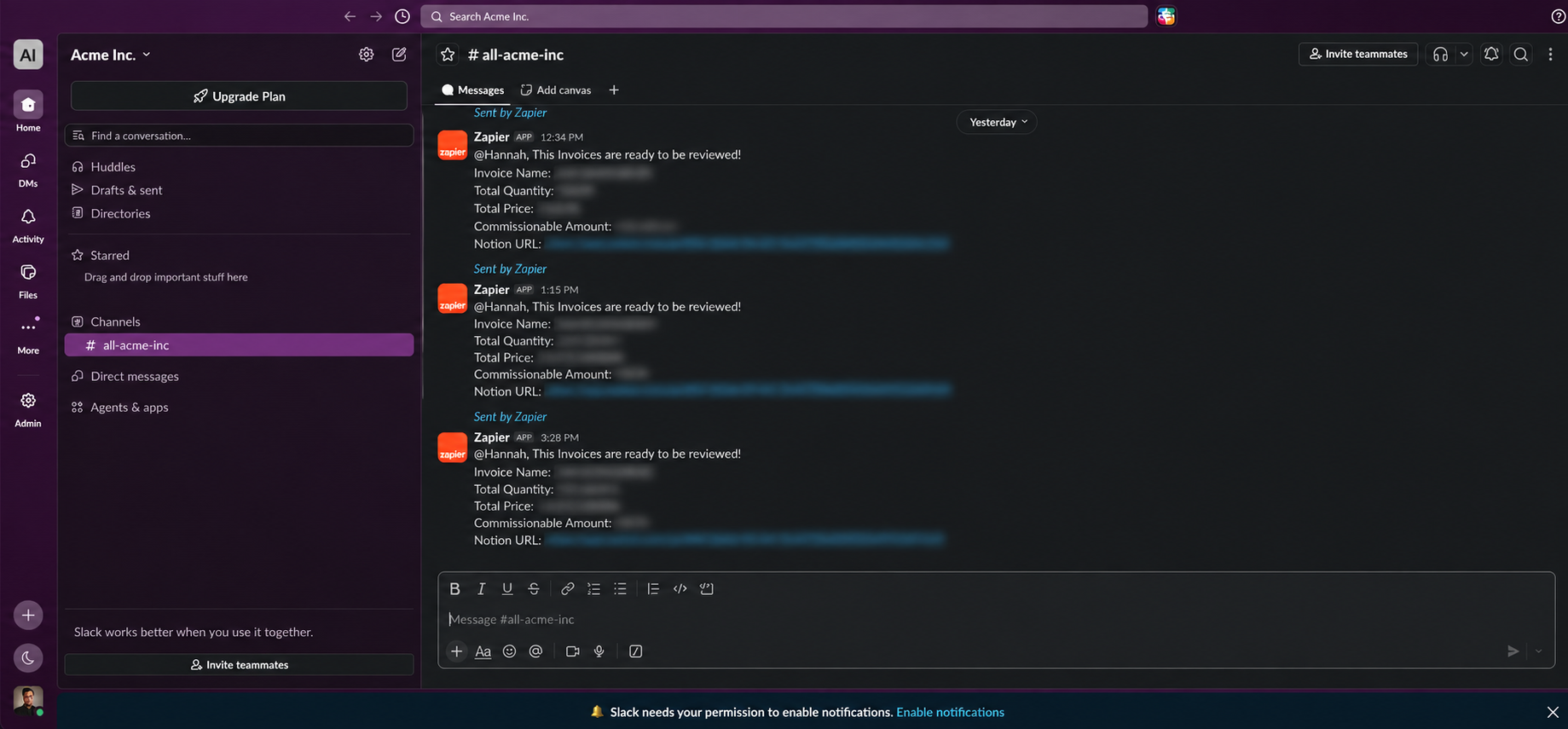
  • Product-to-Task Generation
  • QuickBooks Synchronization
  • Slack Notifications
  • Due Date Monitoring
  • Revenue Status Updates
In total, the system includes 40+ automated workflows supporting business operations.
These automations reduce repetitive administrative work while helping ensure processes follow consistent rules as Ring Digital scales.
5. Business Integrations & Cross-Platform Operations

Not every part of Ring Digital’s technology stack needed to be replaced.
Instead, the Notion operating system was connected with the tools the company already uses.
Key integrations include:
  • QuickBooks for accounting and invoice synchronization
  • Slack for operational notifications and team communication
  • Zapier for workflow automation and cross-platform orchestration
Information can move between these platforms without requiring employees to repeatedly enter or manually transfer the same data.
Notion acts as the central operational layer while specialized platforms continue handling their respective functions.
 

6. Executive Reporting & EOS

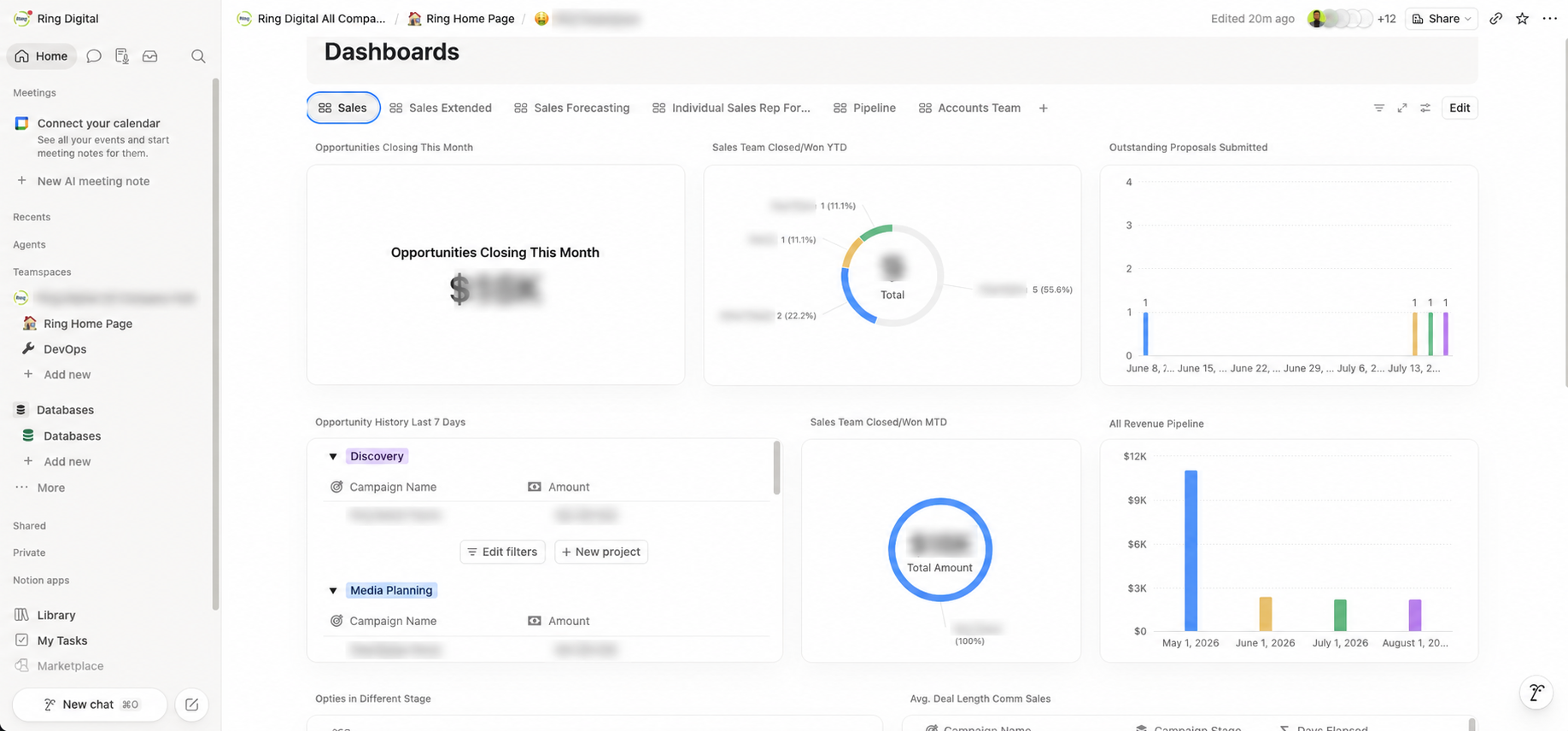
The final layer of the system connects daily operations with leadership and strategic planning.
Executive dashboards provide visibility into:
  • Sales Pipeline
  • Revenue Forecasting
  • Billing Health
  • Commission Reporting
  • Campaign Performance
  • Financial Performance
  • Operational KPIs
We also integrated Ring Digital’s Entrepreneurial Operating System directly into the workspace.
The EOS system includes:
  • Vision & Traction Organizer
  • Quarterly Rocks
  • Weekly L10 Meetings
  • Scorecards
  • Issues Tracker
  • Accountability Chart
Instead of keeping strategic planning separate from operational execution, leadership can now connect company priorities with the work happening across the business.
Full Implementation Summary

  • ClickUp Workspace Setup – Five-space structure covering Client Projects, Operations, Sales, HR, and Resources
  • Master Project List – Cross-project visibility board pulling status, materials, change orders, and communications from all active project folders
  • Automated Project Folder Creation – Zapier creates the full project folder and applies templates when HubSpot deal is handed off to operations
  • Project Task Templates – Phase-based templates for the 48-hour handoff, 3-week pre-install, during construction routines, and final week closeout
  • Dependency-Linked Due Dates – One date change cascades automatically across all connected tasks
  • CM Routine Tasks List – Recurring daily and weekly construction manager tasks that auto-regenerate on completion
  • Change Orders Board – Template-driven tracking with typical and fast-track workflows, visible at both project and master level
  • Warranty Requests Board – Client-facing form submission with conditional task templates based on warranty type
  • Client Communication List – Per-project communication list connected to email so the team sends and receives client emails directly through ClickUp comment threads, with separate comment threads per subject for organization
  • Master Client Communication List – Cross-project view of all active client conversations visible to leadership from one place
  • Subcontractor Directory – Centralized database of subcontractors linked to relevant project folders
  • Materials and Deliveries List – Dedicated per-project list for material tracking, importable from LMN
  • HubSpot Deal Stage Sync – Real-time Zapier automation keeping ClickUp and HubSpot aligned at all times
  • HR Recruitment System – Website-embedded application form that populates the Recruitment list automatically
  • Automated Employee Onboarding – Hire trigger applies the full onboarding checklist without manual setup
  • Employee Directory – Form-based intake that populates a structured staff database in ClickUp
  • Software and Password Manager – Subscription tracking with a monthly spend dashboard
  • SOP library – Video SOPs organized by process inside the Resources space
  • ClickUp Training Materials – Internal training folder to onboard the Groff team to the new system

Results in Detail

Created One Connected Source of Truth

Sales, operations, finance, project management, and leadership now operate from one connected Notion environment.
Customer and operational information can be entered once and referenced throughout the system instead of being repeatedly recreated across departments.

Standardized the Complete Revenue Lifecycle

Ring Digital now has a defined operational journey connecting:
Lead → Account → Campaign → Product Line Items → Billing Schedule → Invoice → Commission → Payment → Reporting
This creates greater consistency across sales, account management, operations, and finance.

Automated 40+ Operational Workflows

Repetitive processes across billing, invoicing, commissions, campaign management, tasks, notifications, and revenue tracking were automated.
This reduces the amount of manual administration required to operate the system while helping maintain consistent business rules.

Improved Financial Visibility

Billing schedules, invoices, payments, commissions, and revenue forecasts are connected to the same underlying customer and campaign data.
Leadership can therefore monitor both current financial activity and future revenue from a more unified reporting environment.

Created Real-Time Executive Visibility

Executive dashboards bring together sales pipeline, projected revenue, billing health, commissions, campaign performance, financial information, and operational KPIs.
Leadership no longer needs each department to manually compile separate reports before reviewing overall business performance.

Connected Strategy With Daily Execution

EOS is now part of the same workspace used for operational execution.
Quarterly Rocks, weekly L10 meetings, scorecards, issues, and accountability can be managed alongside the business data and workflows responsible for delivering those objectives.

Built a Scalable Operational Foundation

The Notion architecture was designed as a business operating system rather than a standalone CRM.
As Ring Digital introduces new customers, services, workflows, and automations, the underlying connected database architecture can support those additions without requiring the company to rebuild its operating model from scratch.

From CRM Replacement to Business Transformation

What began as a Salesforce migration became a broader redesign of how Ring Digital operates.
Instead of replacing one CRM with another, Camel Tech connected customer management, campaign delivery, revenue operations, finance, workflow automation, reporting, and strategic planning through a unified Notion architecture.
Sales can see what happens after a deal closes. Operations can work from the same customer and campaign records. Finance can trace billing and commissions back to the underlying services. Leadership can monitor performance without waiting for manually compiled reports.
The result is not simply a custom Notion CRM.
It is a connected business operating system designed around how Ring Digital actually works.

Frequently Asked Questions (FAQ)

“Excellent service provider and also a great human! Part of our team now on an ongoing basis.”

Picture of John Crease

John Crease

CEO, Crease Group

Yes, depending on the company's requirements. For agencies, service businesses, and consulting firms, a custom Notion CRM can combine customer management with operational workflows, project management, reporting, and automation.
The important part is designing the system around the company's actual processes rather than simply recreating Salesforce tables inside Notion.
A Salesforce-to-Notion migration should begin by mapping the existing data architecture and understanding how the business actually uses that information.
Customer relationships, historical records, and operational context can then be migrated while the new Notion database architecture is designed around the desired workflows.
A Notion business operating system is a connected workspace that combines multiple business functions around shared databases and workflows.
Depending on the organization, this can include CRM, sales, project management, revenue operations, billing, finance, reporting, automation, and strategic planning.
A Notion RevOps system connects the stages responsible for generating and collecting revenue.
For Ring Digital, this means connecting Lead → Account → Campaign → Product Line Items → Billing Schedule → Invoice → Commission → Payment → Reporting.
This allows different departments to work from the same underlying revenue data.
Yes. Notion can act as the operational database while automation platforms and accounting integrations execute workflows between systems.
For Ring Digital, automated processes include billing schedule generation, invoice workflows, commission splits, commission approvals, payment updates, and revenue status changes.

Yes. Ring Digital's system uses QuickBooks for accounting and invoice synchronization, Slack for operational communication and notifications, and Zapier for workflow orchestration between platforms.

Yes. EOS components such as the Vision & Traction Organizer, Quarterly Rocks, L10 Meetings, Scorecards, Issues Tracker, and Accountability Chart can be structured inside Notion.
Connecting these systems with operational databases also helps link strategic planning with daily execution.

The source case study does not provide a specific implementation duration for Ring Digital.
The timeline for this type of system depends on migration volume, database architecture, workflow complexity, automation requirements, integrations, testing, and adoption needs. Enterprise implementations are typically delivered in structured phases rather than as a single migration event.

Related Success Stories

Medical Legal

Learn how Camel Tech implemented ClickUp for a medical case management company, automating workflows, centralizing

How to Implement ClickUp for a Landscaping Company

Learn how a landscaping business automation system replaced email chaos, centralized operations, and helped a
Clothing Manufacturer, Camel Tech, Automation, Scale

Scaling a global clothing manufacturer is complex. Crease Group partnered with Camel Tech to implement

Build a business that thrives without you

Unlock your ultimate life goals: Focus on high-leverage tasks, personal growth, and family time while pursuing your next big initiative.

Let's book a call with our expert.

Trusted by 60+ Companies Social Proof