
Best AI Automation Agencies for Small and Medium Businesses in 2026

Imrul Hasnat
Founder, Camel Tech
- Last Updated:September 24, 2026
20 mins read
Table of Contents
Best AI Automation Agencies
If you’re looking for an AI automation agency for a small, medium-sized, or mid-market business, these seven agencies cover different approaches, from business systemization and multi-platform automation to platform-specific workflow builds and custom AI development.
- Camel Tech for tool-agnostic business systemization and applied AI, the only agency in this list not locked to a single automation platform, working across Make, Zapier, n8n, and 50+ other tools
- Flow Digital for businesses moving sensitive customer or payment data that need automation built to audited security standards
- GrowwStacks for operations-heavy SMBs that need complex, multi-step workflows automated end-to-end
- 2V Automation for SMBs that need production-grade automation systems integrated with internal tools and custom logic
- Axe Automation for businesses that want a platform-agnostic partner rather than committing to one automation tool upfront
- Atomic Actions for budget-conscious SMBs that need one specific workflow automated well, not a full program
- Markovate for startups that need a custom AI agent built from scratch rather than a connected-tool workflow
This list focuses on agencies that help small and Medium Companies automate business operations using AI agents, workflow automation platforms, and connected business systems. It excludes enterprise AI consultancies built for large-scale transformation, custom model development, and Fortune 500 implementations. If you’re running multi-country, multi-department AI transformation with dedicated compliance and governance requirements, the buying criteria are genuinely different, and firms built for that tier are a better starting point than anything covered here.
Most of the agencies below specialize in workflow automation, each built around a single platform: Zapier, Make, or n8n. Camel Tech works across all three, plus ClickUp, Notion, Monday.com, Salesforce, HubSpot, and 50+ other tools. One agency, Markovate, specializes instead in custom AI agent development for teams that need something built from scratch. The right choice depends on whether you need process redesign, workflow automation, CRM automation, or a custom AI build, and which platform, if any, your business already runs on.
A Warning Before You Read Any “Best AI Automation Agency” List in 2026
Before this list, one honest disclosure. The AI automation agency category has become one of the most SEO-gamed corners of B2B services. While researching this guide, we read more than a dozen “top AI automation agencies” roundups. Several were published by an agency that ranked itself first on its own domain, using its own criteria. Several read like an agency grading its own homework: paid products framed as “the clear winner” in a ranking the same company published, or client rosters that couldn’t be traced to a single verifiable source.
That does not mean the category has no real players. It means the signal is buried under marketing copy, and finding it requires cross-checking rather than trusting the first search result. For this guide, an agency only made the list if it showed up through at least one of these independent signals: a Clutch profile with reviews verified by Clutch itself, not self-reported; named enterprise or well-known clients that can be independently confirmed; or repeated appearance across multiple unrelated third-party roundups rather than a single self-published one. We left off agencies that appeared only in listicles they authored or had no verifiable client evidence, no matter how polished their website looked.
Quick Comparison: Best AI Automation Agencies at a Glance
| Agency | Best For | Strengths | Limitations |
|---|---|---|---|
| Camel Tech | SMB and mid-market companies that want business systems, process design, and AI automation working together. |
Systems-first and tool-agnostic. Designs the business process
before touching software. Works by mapping how the business
actually runs and removing operational gaps. AI comes as a
working system instead of a standalone tool.
ClickUp Verified Solution Provider (VSP), Notion Solutions Partner, monday.com Certified Partner, with 100+ implementations across 15 industries. | Focused on full business systemization and transformation. Not designed for small ad hoc automation projects. |
| Flow Digital | SMBs/mid-market businesses wanting deep, secure Zapier automation. | Zapier's top Premier Partner tier, SOC 2 Type II certified, documented results including 54.62% fewer manual tasks and 2,000+ tasks automated monthly. | Zapier-first, not platform-agnostic, built for workflow automation, not broader AI product development. |
| GrowwStacks | SMBs needing complex, multi-step Make.com workflows. | Make.com Gold Partner status, automation expertise, AI agents, integrations, dashboards, and documented client results. | Founded in 2022 with a shorter track record than some agencies here. India-based team serving international clients. |
| 2V Automation | SMBs needing production-grade n8n automation systems. | n8n Certified Expert Partner, confirmed directly on n8n's directory. SMB-focused with multi-city presence and documented client results. | n8n-specific. Review count varies by source, with seven confirmed reviews on n8n's directory. |
| Axe Automation | SMBs wanting platform-agnostic automation on a budget. | Dual expertise across Zapier and Make.com, $1,000+ minimum project size, accessible pricing, and documented JLL case study. | 16 Clutch reviews with a 4.7 overall rating. Built for workflow automation, not complex custom development. |
| Atomic Actions | Budget-conscious SMBs needing one workflow automated well. | Lowest verified project minimum in this list, documented Clutch-verified case studies, with concrete contractor and time-saving results. | Best suited to a single, well-scoped workflow rather than enterprise-wide automation. |
| Markovate | Startups and businesses needing custom AI agents or applications. | Perfect 5.0 Clutch rating across 12 reviews, fixed-scope delivery, case studies across healthcare, fintech, and cybersecurity. | Custom AI development rather than workflow automation. Less suitable for businesses specifically needing Zapier, Make, or n8n implementation. |
The Best AI Automation Agencies for SMBs in 2026
Camel Tech: Engineering-Led Automation for SMB and Mid-Market Companies
Camel Tech is a business systemization consultancy with ClickUp Verified Service Provider (VSP), Notion Solutions Partner, Monday.com Certified Bronze Partner, Lovable Certified Partner, OpenAI Select Partner status, and 100+ implementations across construction, accounting, healthcare, agencies, and other professional services businesses.
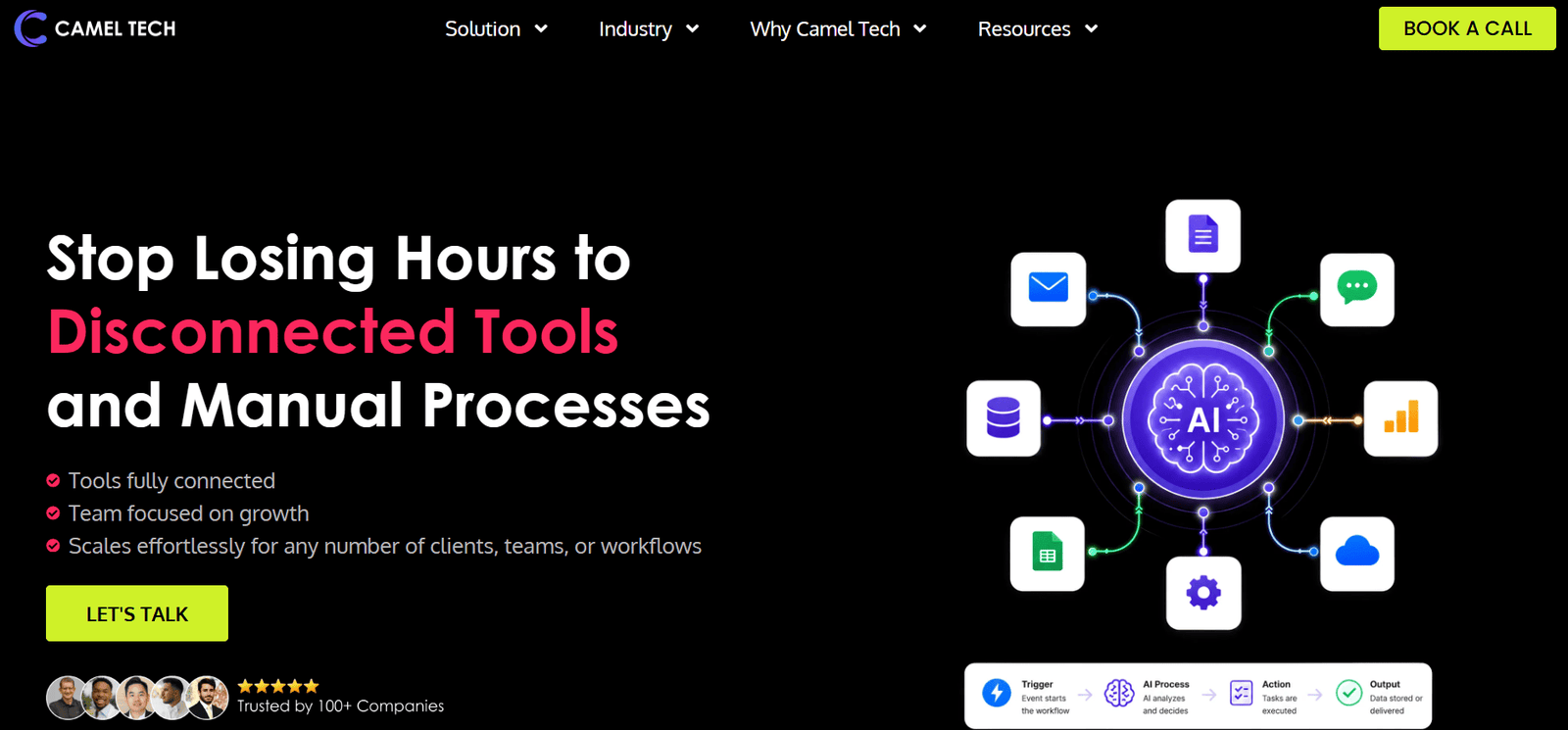
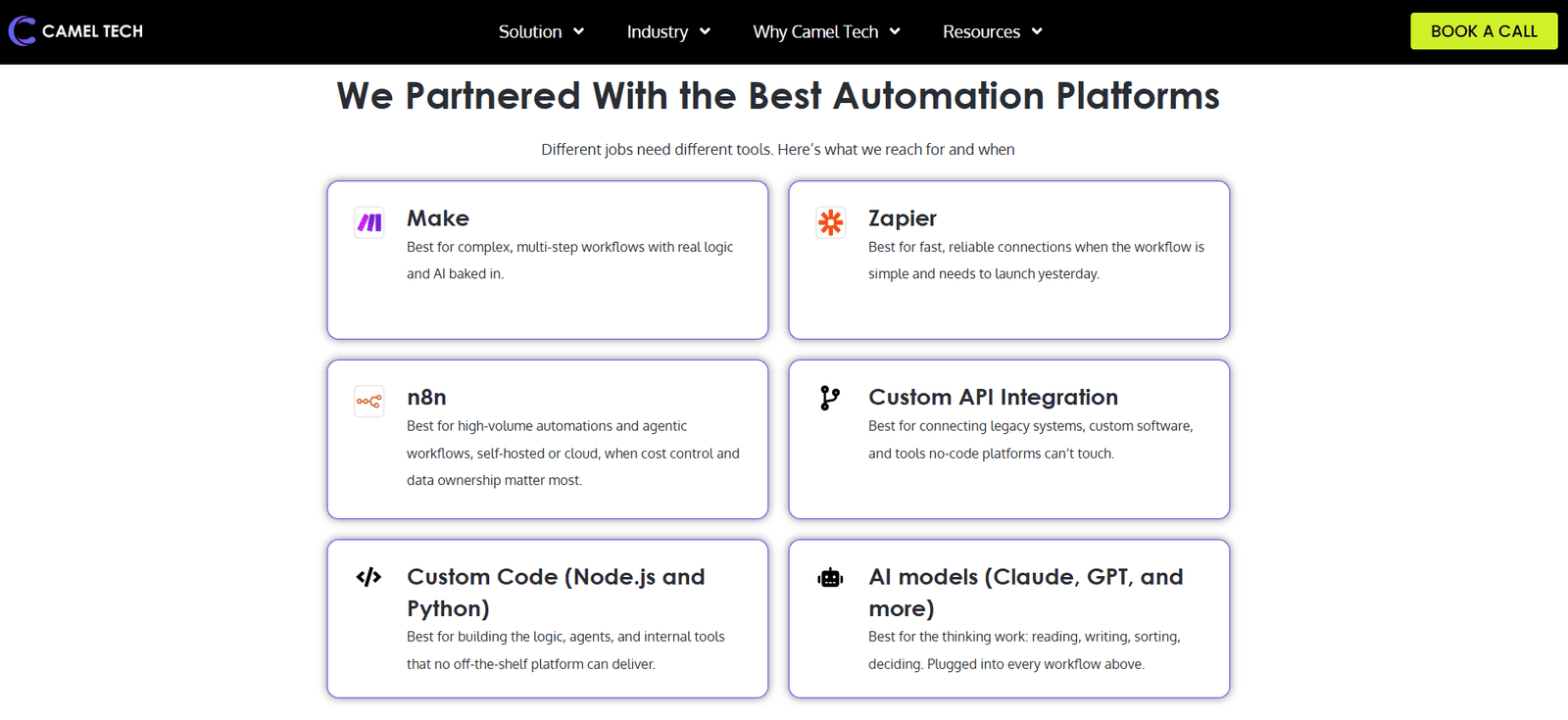
It isn’t built around a single automation platform. Its site documents direct engineering work across Make.com, Zapier, and n8n, plus ClickUp, Notion, Monday.com, Salesforce, HubSpot, and 50+ other tools, building custom API integrations when off-the-shelf connectors fall short. One documented build combines a Zapier-triggered workflow, a Notion knowledge base, and Fireflies AI meeting transcription in a single system, not a single vendor’s template. The team starts from the operating system a business already runs on, then layers AI automation into it, since an undocumented process, not a missing integration, is usually what actually breaks automation.
That systems-first approach is also reflected in client feedback. Arleigh Banner, Founder and CEO of CollXlab, said Camel Tech’s team was able to “deeply understand our business needs before jumping into execution,” asking questions about how the team operated before structuring its Notion system. He also described the finished workspace as “a real digital headquarters rather than a cluttered tool.”
Best For: SMB and mid-market businesses that want AI automation built on top of a properly systemized operation, not layered onto chaos, including teams whose existing tools or legacy systems don’t have a pre-built no-code connector. Founders who are still the bottleneck for too many decisions. Teams running on EOS® (Entrepreneurial Operating System®) who need AI agents that respect their existing meeting rhythm, scorecards, and accountability structure rather than working around it. Dr. Unoma Okorafor, CEO of Herbal Goodness, specifically describes Camel Tech as a “Great partner for small businesses” with expertise across “various tools, automation, and AI.”
Services: The Get Organized engagement builds the foundation: a full audit and implementation of ClickUp, Notion, or Monday as the business’s central command center, with native automation built in from day one. The Get AI Automated engagement builds directly on that foundation: AI agents, AI-powered knowledge bases, conversational chatbots, and AI phone receptionists, built inside your existing automation stack (Zapier, Make, n8n) using OpenAI, Claude, and Gemini APIs, plus automation across sales, marketing, support, and delivery. The Get SCALEable engagement combines both into a single program with a 12-month implementation warranty. Pricing is scoped to the business during a system audit rather than fixed in advance, and an ongoing monthly retainer covers continued automation builds and optimization after launch.
A similar pattern appears in the SuCasa Vacay case study. Vanessa Le, Co-Founder, says Camel Tech helped the company move from “lots of moving parts” and insufficient structure to a centralized ClickUp system covering tasks, leads, goals, and accountability, alongside integrations, automations, SOPs, training videos, and checklists. She says the support after implementation has also been “amazing-always responsive and super helpful.”
Strengths:
- Engineering-first, not no-code-only: builds directly against a client’s API using Node.js and Python when off-the-shelf connectors run out, so an integration isn’t blocked just because Zapier, Make, or n8n doesn’t have a pre-built one
- Starts from a documented business process, not from a tool, which reduces the “automated chaos” failure mode common in this category
- Support that continues past launch: every engagement includes a documented handoff, and client reviews consistently cite responsive, ongoing support rather than a team that disappears after delivery
- Same-day response and ongoing error fixes included as a standard part of every engagement, not billed separately
- Documented client outcomes in construction and accounting, healthcare, home care, e-commerce, education, and professional services.
- Ongoing retainer model means the system has an owner after launch, addressing the most common failure point in this category
Limitations:
- Scope and delivery model are built for full transformation, not one-off automation.
- The core offering is business systemization and applied AI automation rather than large-scale model training. Businesses with specialized regulatory, security, or compliance requirements should verify those requirements during the discovery process.
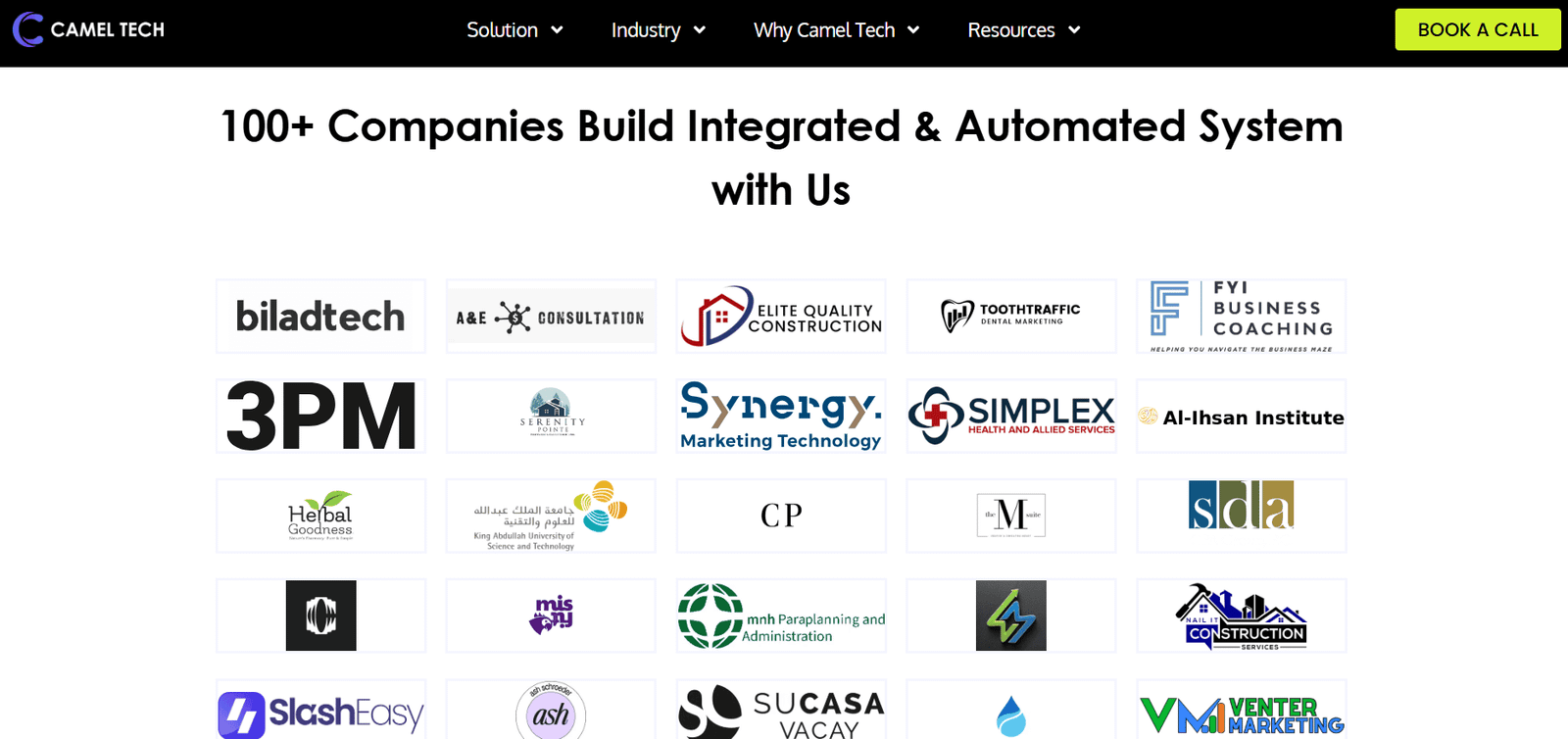
Camel Tech’s client case studies span construction, accounting, healthcare, home care, and professional services, while its public client reviews include named founders, CEOs, and operations leaders describing their experience with system implementation, automation, AI, and ongoing support.
What Clients Say
“Working with Imrul and the team has been great. They are true professionals, diligent, honest, and deliver on what they say.”
–John Crease
Founder & CEO, Crease Group
Watch the Crease Group Client Video Testimonial.
“They built my system from the ground up by collaborating on my needs. They took the stress away on things I didn’t have time to do as a busy entrepreneur.”
Tiffiny, Founder, Tiffiny & Mercer
“I’ve worked with Camel Tech on multiple complex projects, and they’ve consistently delivered exceptional results. Incredibly professional, easy to communicate with, and always on time.”
Michael Kramer, CEO, Bagel Bots
“Imrul with Camel Tech has been great to work with! Helped us get ClickUp running smoothly and continues to help us tweak it. Highly recommend!”
Stanley Dean, CEO, SDA CPA Group
Watch the SDA CPA client Video Testimonial.
Prefer more videos? Camel Tech also publishes video testimonials from clients, including Crease Group, SDA CPA Group, Simplex Health, Synergy Marketing Technology, Citadel Electrical, Knock Knock, and Bagel Bots on its public client reviews page and YouTube channel.
Flow Digital: Zapier-Certified Automation With Enterprise-Grade Security
Headquartered in New York, Flow Digital holds Zapier’s top Premier Partner ranking, the highest tier in Zapier’s Solution Partner Program, and is SOC 2 Type II certified. Zapier’s own community team named Flow Digital a Premier Expert of the Month and has featured its client work directly on the Zapier blog.
Documented client results include a 54.62 percent increase in orders handled for an ecommerce brand, more than 2 million minutes saved for a luxury travel company, and 2,000+ automated tasks running monthly for a global SaaS company. Zapier’s own blog and community team have separately featured Flow Digital client work.
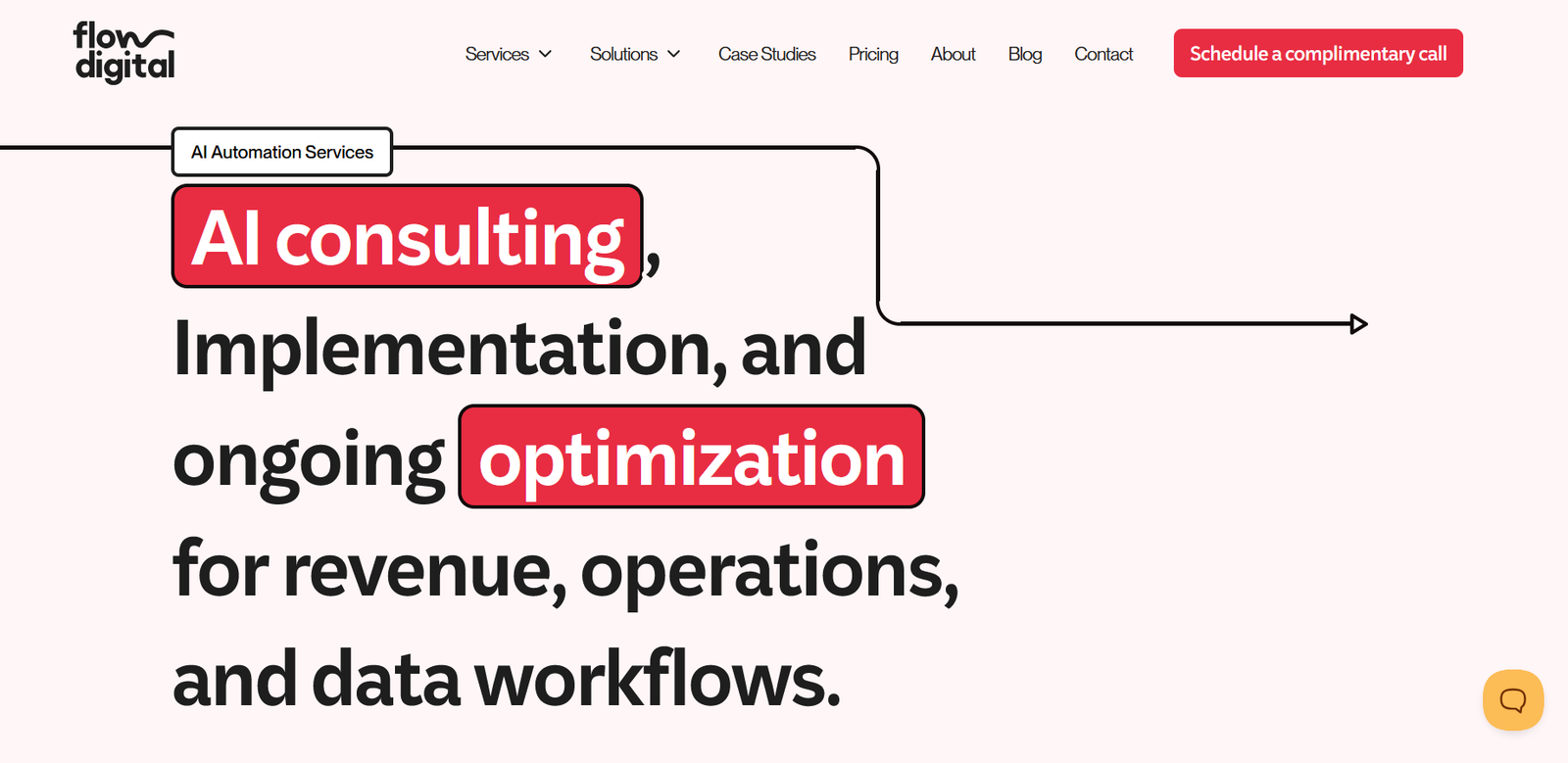
Best For: SMB and mid-market businesses moving sensitive customer or payment data through automated workflows, where security certification matters more than platform flexibility.
Strengths:
- Zapier’s top-rated Premier Partner status, the highest tier in Zapier’s own Solution Partner Program, awarded by Zapier rather than self-declared
- SOC 2 Type II certified, which matters for any business routing customer or payment data through automation
- Platform-verified case results across ecommerce, SaaS, and travel clients, with figures published directly on Flow Digital’s own site
- 750+ clients served and 470+ five-star reviews (per Zapier’s partner directory), with client work featured directly by Zapier
Limitations:
- Zapier-first rather than platform-agnostic; businesses already committed to Make or n8n may be better served elsewhere
- Built for workflow automation specifically, not broader AI agent architecture or product development work
GrowwStacks: Complex Operational Workflows for Growing Businesses
GrowwStacks holds Make.com’s Platinum Partner status, representing the platform’s highest tier and placing it within an elite global network of agencies. Established in 2022, the firm has successfully executed over 2,000 automation projects for small and medium-sized businesses with revenues ranging from $5 million to upwards of $10 million.
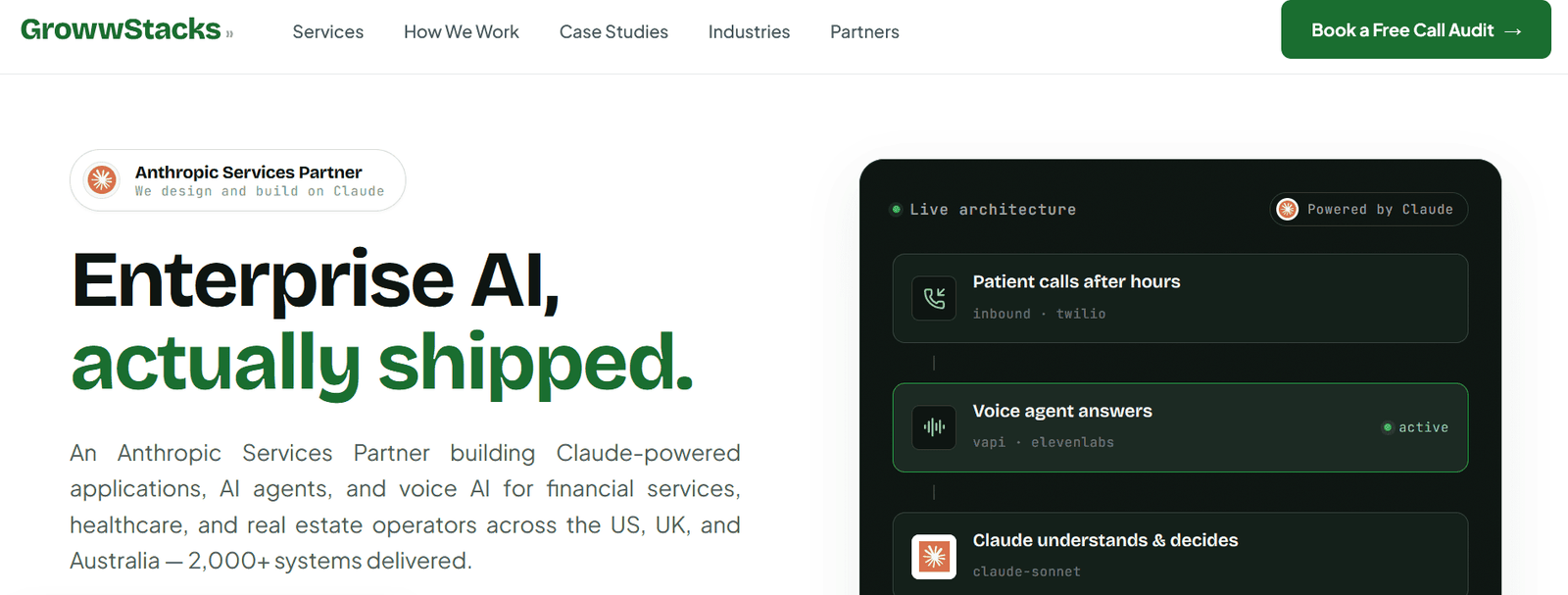
Best For: Operations-heavy SMBs that need multi-step, multi-app workflows automated end-to-end, not a single simple connection between two tools.
Strengths:
- Make.com Platinum Partner status, awarded rather than self-declared
- Named, Clutch-verified client results (Beer Neon Signs reported a 60 percent-plus cut in downtime and manual labor)
- Clear focus on the $5M to $10M-plus SMB revenue band, rather than a broad enterprise-to-startup range
Limitations:
- Founded in 2022, a shorter track record than most agencies in this list
- Team is based in India, serving clients remotely across the US, Europe, and Australia, worth noting for buyers who want a local presence
2V Automation: Production-Grade Internal Systems Automation
2V Automation is listed directly on n8n’s own official partner directory with n8n Certified Expert Partner status. Based in New York, with additional offices in Boston, Miami, Toronto, and London, tagged “SMB focused” on its own directory listing.
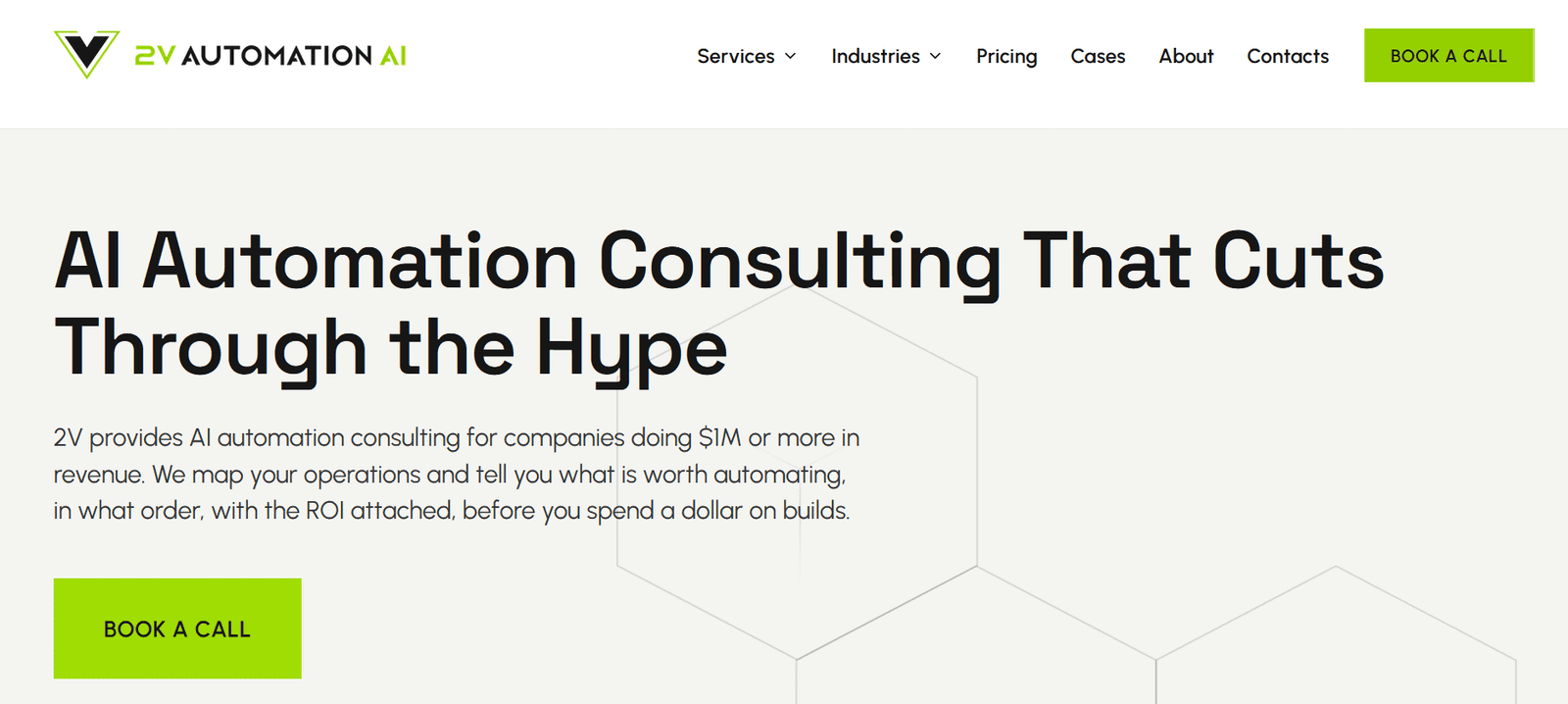
Best For: US-based SMBs that need internal processes, payment cycles, lead routing, and reporting automated with production-grade reliability, not a quick demo build.
Strengths:
- n8n Certified Expert Partner status, confirmed on n8n’s own directory
- US-based with multi-city presence
- Named, documented client results: roughly 230 hours of manual work eliminated per month and a payment cycle cut from two weeks to two days for one client, a 25 to 30 percent turnaround improvement for another
Limitations:
- n8n-specific; businesses standardized on Zapier or Make may be better served by a platform-matched specialist
- Review count varies by source, with 7 confirmed directly on n8n’s own directory
Axe Automation: Platform-Agnostic Implementation on a Budget
Axe Automation works across Zapier, Make, ClickUp, and Asana rather than being locked to one platform, with 16 Clutch reviews and a named client, JLL, the commercial real estate firm.
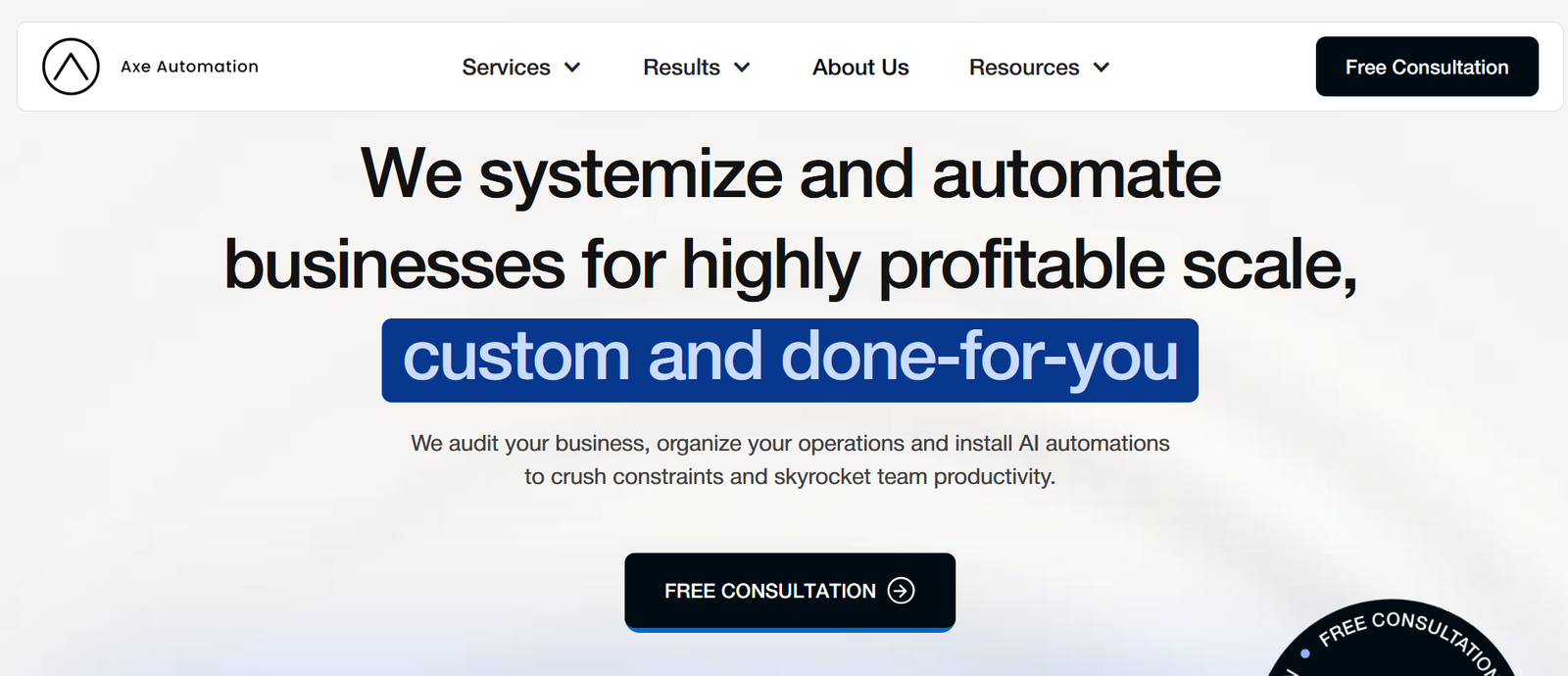
Best For: SMB operators who aren’t sure which automation platform fits their business yet and want advice before committing to a full infrastructure rebuild.
Strengths:
- Dual expertise across Zapier and Make.com rather than single-platform lock-in
- Accessible $1,000+ minimum project size, one of the lower entry points in this list
- Documented case study (JLL contract automation)
Limitations:
- Clutch rating (4.7) is in this list
- Better suited to workflow automation than complex custom development work
Atomic Actions: The Lowest-Cost Entry Point for One Workflow
Atomic Actions has a $1,000-plus minimum project size, the most accessible entry point in this list.
Best For: Budget-conscious SMBs that want one specific workflow automated well, not a full transformation program.
Strengths:
- Lowest verified project minimum in this list
- Documented, Clutch-verified case studies: $18,000 per year saved and a 90 percent cut in manual delivery time using Make.com for one client; a 70 to 85 percent reduction in manual coordination and data entry using ClickUp for another
Limitations:
- Smaller shop best suited to a single, well-scoped workflow rather than enterprise-wide automation
- Clutch review count fluctuates between snapshots, ranging from 8 to 12 in recent checks
Markovate: Fast AI Agent Builds for Startups and Growth-Stage Teams
Founded in 2015 and headquartered in San Francisco, Markovate focuses on shipping AI copilots, conversational agents, and workflow automation quickly for startups and growth-stage businesses, with a stated emphasis on measurable business outcomes over technical showpieces. It appears across multiple independent AI agent development rankings with an aggregate 5.0 Clutch rating across 12 verified reviews.
Best For: Startups and fast-scaling companies that need an AI agent live in weeks rather than quarters and cannot absorb a long, enterprise-style discovery phase.
Strengths:
- Perfect 5.0 aggregate Clutch rating across all 12 verified reviews
- Fast, fixed-scope delivery built for teams that can’t absorb a long enterprise-style discovery phase
- Case work spans a genuinely broad range of industries (manufacturing, construction, healthcare, insurance, and finance)
- Founded in 2015, a longer track record than its startup-focused positioning might suggest
Limitations:
- Speed-first model trades off some of the deep architectural customization that larger, enterprise-focused custom AI engineering firms offer
- Businesses with complex compliance requirements or highly bespoke multi-agent needs may outgrow this tier
How We Evaluated These Agencies
This guide was researched and written by Imrul, founder of Camel Tech and a tool-agnostic automation practitioner with hands-on implementation experience across construction, healthcare, accounting, agencies, and professional services. It was reviewed by Camel Tech’s consultants and software engineers Mubin and Hisham, and Kayes, each of whom has hands-on experience with the automation platforms and business systems described below. Every specific claim about a competing agency, client name, award, or credential in this guide was checked against that agency’s own official site, the relevant platform’s own partner directory (n8n, Make, Zapier), a Clutch profile, or independent press coverage before inclusion.
Every AI automation agency on this list was evaluated across seven criteria. These are not arbitrary. They reflect the factors that determine whether an AI automation build survives past the first ninety days, not just the demo.
- SMB and mid-market fit. Has the agency actually worked with companies under 1,000 employees and founder-led businesses, or does its client roster and pricing floor point toward enterprise buyers instead?
- Business process understanding before the build. Does the agency map the actual workflow and its failure points before writing automation logic, or does it start with the tool?
- Platform fit and certification. Does the agency build inside the client’s existing stack rather than forcing a rebuild, and for platform-specific agencies, do they hold that platform’s own highest-tier, externally awarded partner credential, confirmed on the platform’s own directory?
- Production reliability, not demo quality. Does the delivered system include error handling, monitoring, and fallback logic, or does it stop at a working prototype?
- Post-launch ownership. AI automation drifts as models and APIs change. Does the agency offer ongoing monitoring and iteration, or is the relationship over at handover?
- Pricing transparency. Is the cost structure clear enough to budget against, or does it only appear after a sales call?
- Documented results with verifiable proof. Claims without evidence are marketing. We looked for published case studies, named clients, platform partner status, and measurable outcomes.
What Most Businesses Get Wrong About Hiring an Automation Agency
Most businesses ask, “Who can build us an AI agent or automate this workflow?” The better question is, “Who can diagnose which parts of our business are actually worth automating, and then build something that survives contact with our real data, our real team, and next quarter’s product update?”
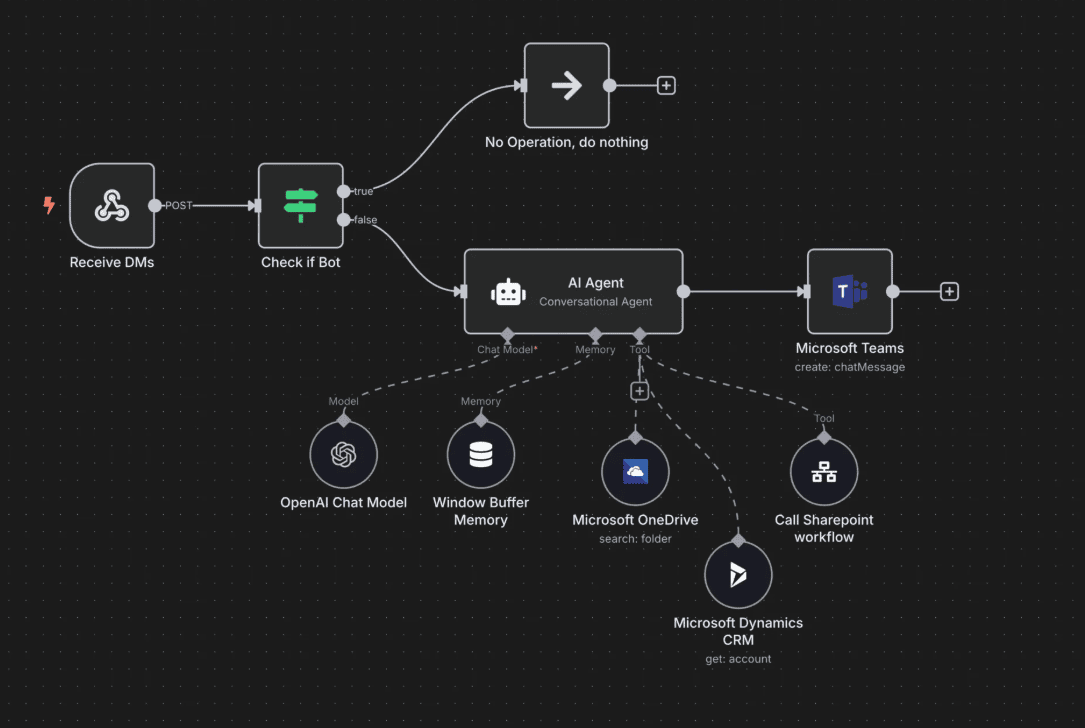
A slick demo of an AI agent answering customer emails is not the hard part in 2026. Every agency in this space can produce that demo. The hard part is what happens after: does the agent still work when the CRM schema changes, when the LLM provider ships a new model version, when the person who understood the workflow leaves the company? Most AI automation failures are not model failures. They are the result of an agency that scoped a flashy pilot instead of a durable system, and then disappeared after the invoice cleared.
This guide separates agencies that ship demos from agencies that ship systems someone still owns in six months.
Why Businesses Hire AI Automation Agencies in 2026
There are generally four triggers.
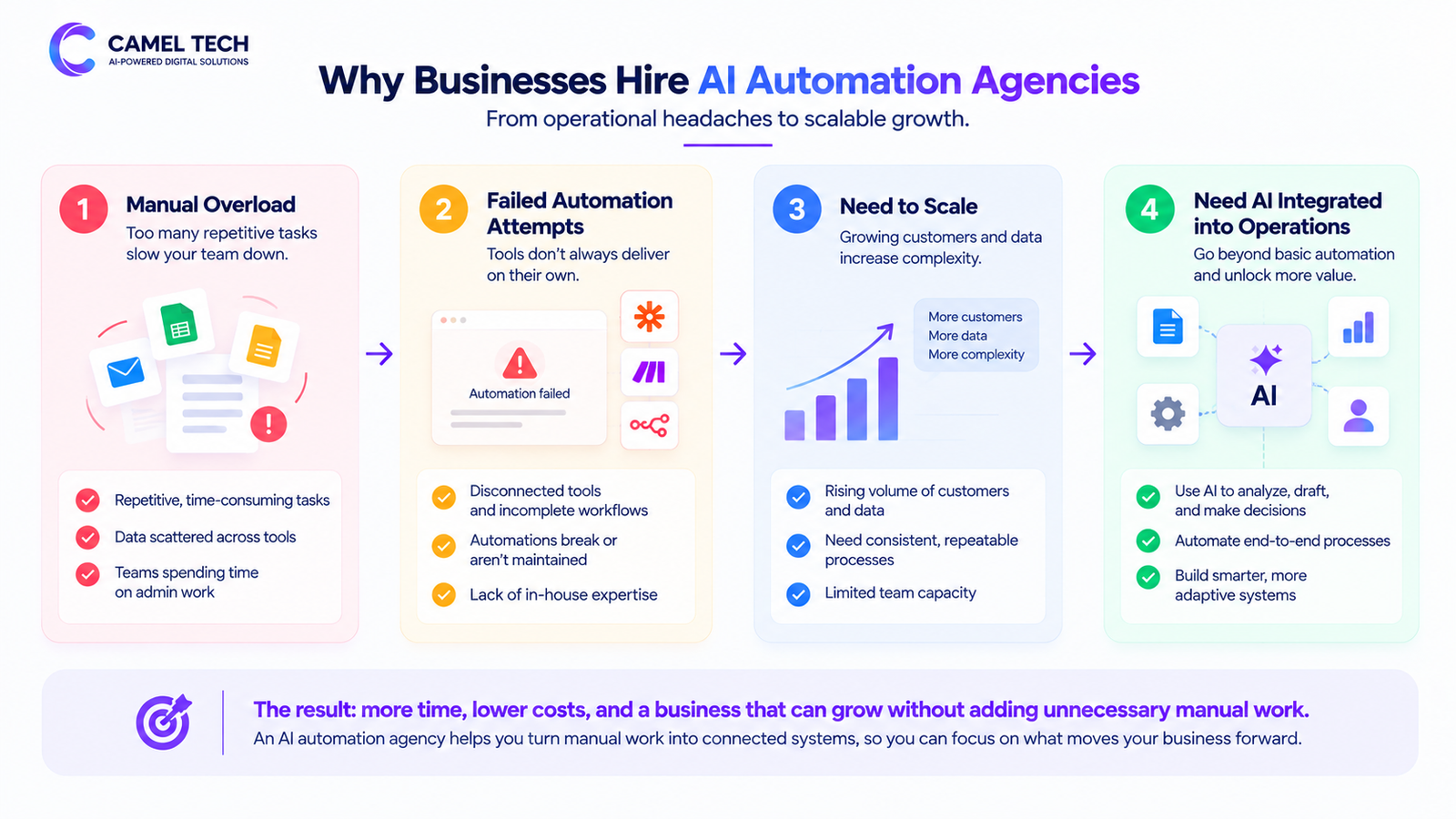
- The first is manual overload. Sales, support, or operations teams are drowning in repetitive tasks (data entry, follow-ups, document review, reporting) that a person is still doing by hand in 2026, years after the tools to automate them became mainstream.
- The second is a failed or stalled pilot. Someone on the team built a proof of concept with ChatGPT or a no-code tool; it worked in a demo, and it never made it to production because nobody owned the reliability, monitoring, or edge cases.
- The third is competitive pressure. A business sees a competitor moving faster with fewer people and knows AI automation is part of the reason, but does not have the in-house expertise to build it itself.
- The fourth is scale. The business has already systemized its operations on a platform like Notion, ClickUp, or Monday.com. It is now ready for the next layer: AI agents that act inside that system rather than a human copying data between tools.
For a closer look at how these problems show up across real businesses, Camel Tech’s SMB Operations Intelligence Report breaks down the operational patterns behind them.
AI Automation Agency vs. Consultancy vs. Dev Shop
These three categories get used interchangeably, but they are different jobs.
A general AI consultancy (often a large firm) typically starts with strategy: identifying use cases, assessing data readiness, and building a roadmap. The output is frequently a report or a plan, not a working system.
A custom AI or software development shop builds bespoke applications, often including AI components, as part of a broader product build. This is the right category when the deliverable is a new product or platform, not an internal process fix.
An AI automation agency sits between the two. Its job is to take an existing business process and rebuild it so that AI and workflow tools (LLMs, agent frameworks, RPA, Zapier, Make, n8n) do the repetitive parts. At the same time, a human keeps oversight where judgment is genuinely required. The best ones audit the process first, build with the client’s existing tech stack rather than replacing it, and stay involved after launch because these systems drift as models, APIs, and business rules change.
Where to Look for an AI Automation Agency
Most searches start in one of four places, and each comes with a different trade-off.
Freelance marketplaces (Upwork, Fiverr, Toptal) are the fastest way to get a single workflow built cheaply, often in the $500 to $2,000 range. The trade-off is accountability: once the contract closes, there’s typically no ongoing support, and quality varies enormously from freelancer to freelancer, with no independent verification behind the reviews.
Platform partner directories (Zapier’s Solution Partner directory, Make’s partner directory, n8n’s Service Partner Directory, ClickUp’s partner directory) list agencies certified on that specific platform. This is a stronger signal than a marketplace profile, since the platform itself awards the certification. Still, it only tells you whether an agency is good at one tool, not whether it understands your business process or builds systems that survive past handover.
A plain Google search for “best AI automation agency” mostly surfaces exactly the problem this guide opened with: agencies ranking themselves first on their own domain, using their own criteria. Worth checking who published the ranking before trusting it.
Referrals and case-study-driven research, checking Clutch for verified reviews, looking for named clients that can be independently confirmed, reading the agency’s own documented case studies rather than a testimonial page, are slower but the most reliable signals, and are the method this guide itself was built on.
AI Automation Certifications: What They Actually Mean
Unlike Notion’s Consulting Partner program or ClickUp’s partner tiers, there is no single, universally recognized certification for “AI automation agency” as of mid-2026. The closest equivalents are platform-specific, and each means something narrower than it sounds.
| Program | What It Actually Certifies | Status as of Mid-2026 |
|---|---|---|
| Zapier Solution Partner Program | Zapier-specific delivery experience, with partner tiers based on certifications, expertise, and client outcomes. | Active; the current partner program replaced the earlier "Zapier Experts" branding. |
| Make.com Solution Partner Program | Platform proficiency on Make, validated through partner status, certification requirements, and completed client projects. | Active; includes Silver, Gold, and Platinum partner tiers. |
| n8n Certified Expert Partner Program | n8n implementation expertise listed through n8n's official partner ecosystem and expert directory. | Active; separate from general directory listings and community membership. |
| Clutch-verified reviews | Identity and project legitimacy of the reviewer, not a direct certification of an agency's technical capability. | Independent client feedback signal, but not a platform certification. |
Clutch verifies a reviewer’s identity and the legitimacy of the underlying project before publishing a review, and it audits older reviews against its guidelines over time. A Clutch-verified rating is a meaningfully stronger signal than a testimonial on an agency’s own homepage. However, it still isn’t a certification of technical competence like a Notion or ClickUp partner credential.
The practical takeaway: in this category, weigh named, verifiable client work and independently verified reviews far more heavily than badges, since badges alone are thin.
Seven Questions to Ask Before Hiring an AI Automation Agency
1. Can you show me a system running in production today, not a demo?
A working demo proves the model works. It says nothing about what happens when the input data is messy, the API changes, or volume spikes.
2. How does pricing change as our workflow volume or team size grows?
A flat project quote can look reasonable at your current volume and become a very different number once you’re running 10x that six months later. Get a clear answer on how costs scale before you sign, not after volume spikes.
3. Who specifically maintains the automation after it’s delivered, and is that named in the contract?
“We’ll be around if you need us” is not the same as a defined point of contact with a defined response commitment.
4. What does support actually look like day-to-day?
Ask for specifics: response time commitments, whether bug fixes are included or billed as a new project, and whether support means a named person or a ticket queue.
5. Do you build inside our existing tools, or do you require us to adopt new ones?
An agency that insists on its own preferred stack regardless of what you already run is optimizing for its own delivery convenience, not your adoption.
6. Can you point to a named client, not just an anonymized case study?
Anonymized case studies are common and sometimes necessary for confidentiality, but an agency that cannot name a single verifiable client anywhere in its portfolio is a real caution flag in this category.
7. How do you handle the parts of the process that still need human judgment?
An agency that pitches full automation with no human-in-the-loop step for judgment calls is either overselling the technology or hasn’t thought through the failure modes.
How Much Does an AI Automation Agency Cost in 2026?
Pricing for SMB and mid-market automation runs from roughly $1,000 for a single freelancer-built workflow to $200,000 for a multi-department engagement, depending on scope and team size.
| Engagement Type | Typical Range | Best Fit |
|---|---|---|
|
Single workflow automation (Zapier or Make, freelancer-built) | $1,000 to $10,000 | One clearly scoped process with minimal error handling. |
|
Boutique agency engagement (process audit plus a handful of automated workflows) | $5,000 to $50,000 | Small or mid-sized businesses automating a single department. |
|
Mid-market engagement (multiple departments, deeper system integration) | $25,000 to $200,000 | Growing companies with cross-functional workflows and more complex requirements. |
The more useful question than “what does this cost” is “what is the manual process already costing us?” A business paying a team to manually re-key data, chase follow-ups, or generate reports by hand is already absorbing a cost. A properly scoped automation should recover that cost within a defined, measurable window, and a credible agency should be able to walk through that math with you before you sign anything.
Final Recommendation
There is no single best AI automation agency for every business, and any list that claims otherwise is a red flag by itself.
If you’re moving sensitive customer or payment data through automated workflows, Flow Digital’s security certification is worth the platform lock-in. If your operations involve complex, multi-step workflows across many apps, GrowwStacks’ Make.com expertise fits that scale. If you need production-grade internal systems automation with a US-based team, 2V Automation’s n8n certification is the strongest verified option. If you’re not sure which platform fits yet, Axe Automation’s cross-platform approach avoids committing too early. If your budget is limited and you need one workflow automated well, Atomic Actions has the lowest entry point in this list. If you need a custom AI agent built from scratch rather than a connected-tool workflow, Markovate fits that profile.
If you want a partner that works across multiple automation platforms rather than one, and that starts by systemizing the business before automating it, that’s the specific problem Camel Tech is built to solve.
Frequently Asked Questions (FAQ)
For a single, simple workflow, a capable operations person can often build a first version using off-the-shelf tools. Once the workflow touches multiple systems, needs error handling for edge cases, or requires ongoing monitoring as models and APIs change, the DIY approach tends to become a part-time job for whoever built it. That is usually the point where an agency earns its fee.
Robotic Process Automation follows fixed, rule-based steps on structured data. AI automation, particularly the agentic systems most agencies build in 2026, can handle unstructured input such as emails, documents, and natural language, and can adapt its approach when the input varies. Many real implementations combine both: RPA for the predictable, rule-based steps, and AI for the parts that require interpretation.
A credible agency should be able to explain, in specific terms, how your data is handled by any third-party model provider, what is retained versus discarded, and what compliance frameworks (SOC 2, HIPAA, GDPR, and similar) it operates under, where relevant to your industry. Vague reassurance without specifics is a reason to ask more questions before proceeding.
A single, well-defined workflow can go live in one to four weeks. A multi-workflow implementation with proper testing, error handling, and monitoring is more commonly six to twelve weeks. Full multi-agent, cross-departmental systems, especially in regulated industries, can run for three to nine months.
Generally, no, and be cautious of any agency that pitches automation as a reason to rip out a working system. The stronger pattern in 2026 is AI automation layered into the tools a business already runs, whether that is Notion, ClickUp, Monday.com, HubSpot, or Salesforce, rather than automation used as a pretext for a platform migration the business did not ask for.
Look specifically for an agency or a team like Camel Tech that builds AI automation as a layer on top of the platform you already use rather than defaulting to a generic AI stack disconnected from your existing operating system. The adoption risk drops substantially when the AI agent lives inside the same tool your team already opens every day. For a closer look at how this plays out on one specific platform, see our related guides on the best Notion consulting agencies and the best ClickUp consultants and agencies in 2026.
A single, well-defined workflow typically runs $1,000 to $10,000 built by a freelancer or boutique agency. A broader automation program spanning multiple departments runs higher; see the cost breakdown above for the full range by engagement type.
A freelancer is usually the faster, cheaper option for one clearly scoped workflow, but the relationship typically ends when the contract does. An agency generally provides ongoing monitoring, a documented handoff, and a point of contact when something breaks months later; the trade-off is cost against continuity.
If your processes are still undocumented or inconsistent between team members, automation usually surfaces that problem rather than fixing it. A process audit before the build, not after, is the strongest signal that an agency is actually solving the right problem.
Ready to Add an AI Layer to a Business That Actually Runs?
Before hiring any AI automation agency, start with the audit, not the tool. Camel Tech’s SCALEable Audit Call is a 45-minute session covering your current workflows, tech stack, and where time is actually being lost. You receive a System Readiness Report within 48 hours, whether or not you choose to work with us.
Read Related Articles
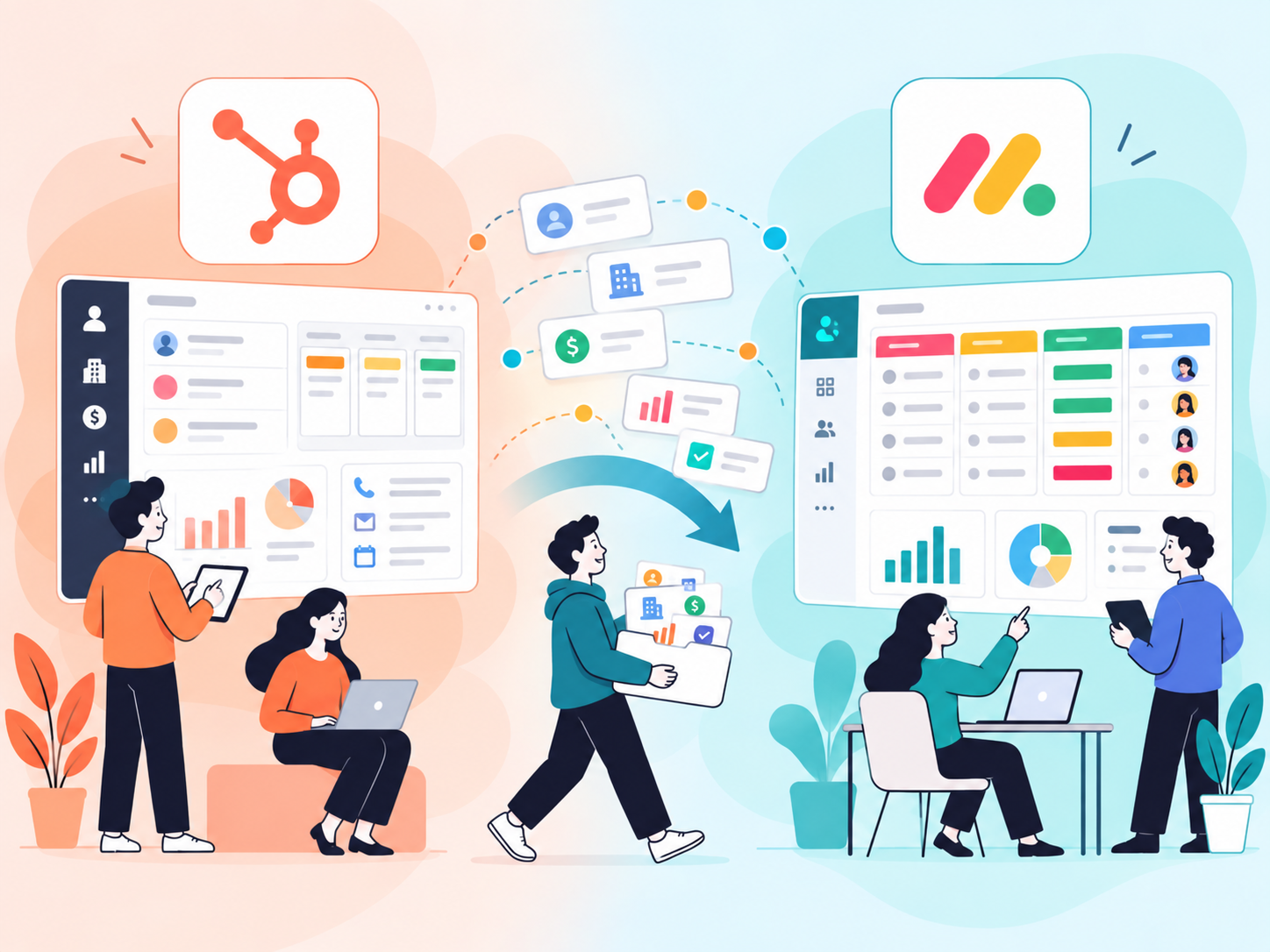
Thinking about switching CRMs? Here's the complete guide to migrating from HubSpot to Monday CRM:
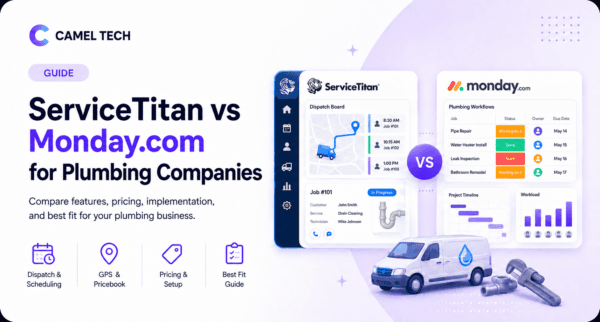
ServiceTitan is purpose-built for plumbing dispatch, GPS, and pricing. Monday.com is cheaper and flexible but
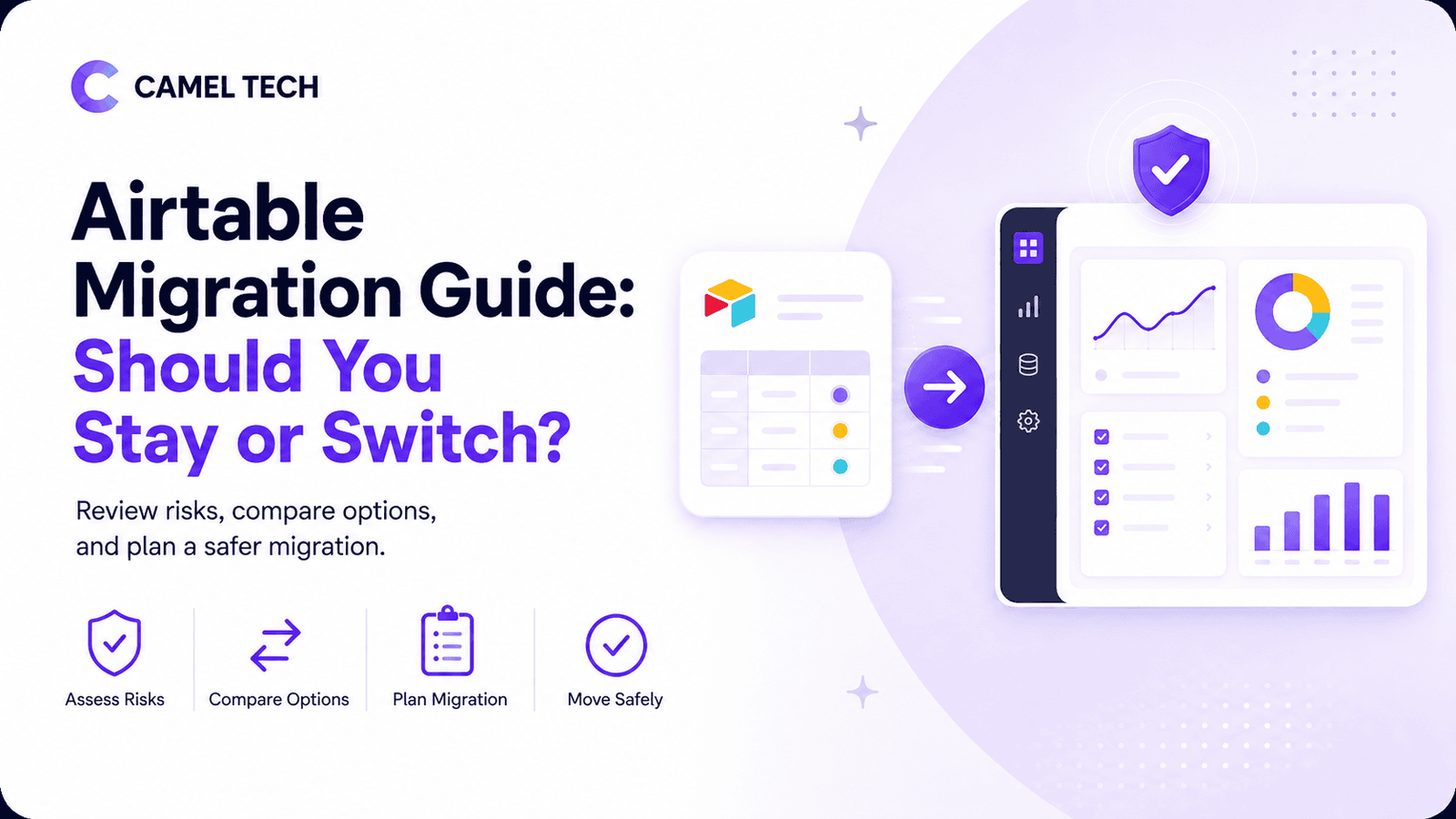
Should you migrate from Airtable after the Bending Spoons deal? Review the risks, compare alternatives,
Build a business that thrives without you
Unlock your ultimate life goals: Focus on high-leverage tasks, personal growth, and family time while pursuing your next big initiative.
Let's book a call with our expert.

Selected resource
Enter your email and we’ll send the resource directly to your inbox.
✓
Check your inbox
We’ve received your request and will send the resource to your email.
Please check your spam or promotions folder if you don’t see it shortly.